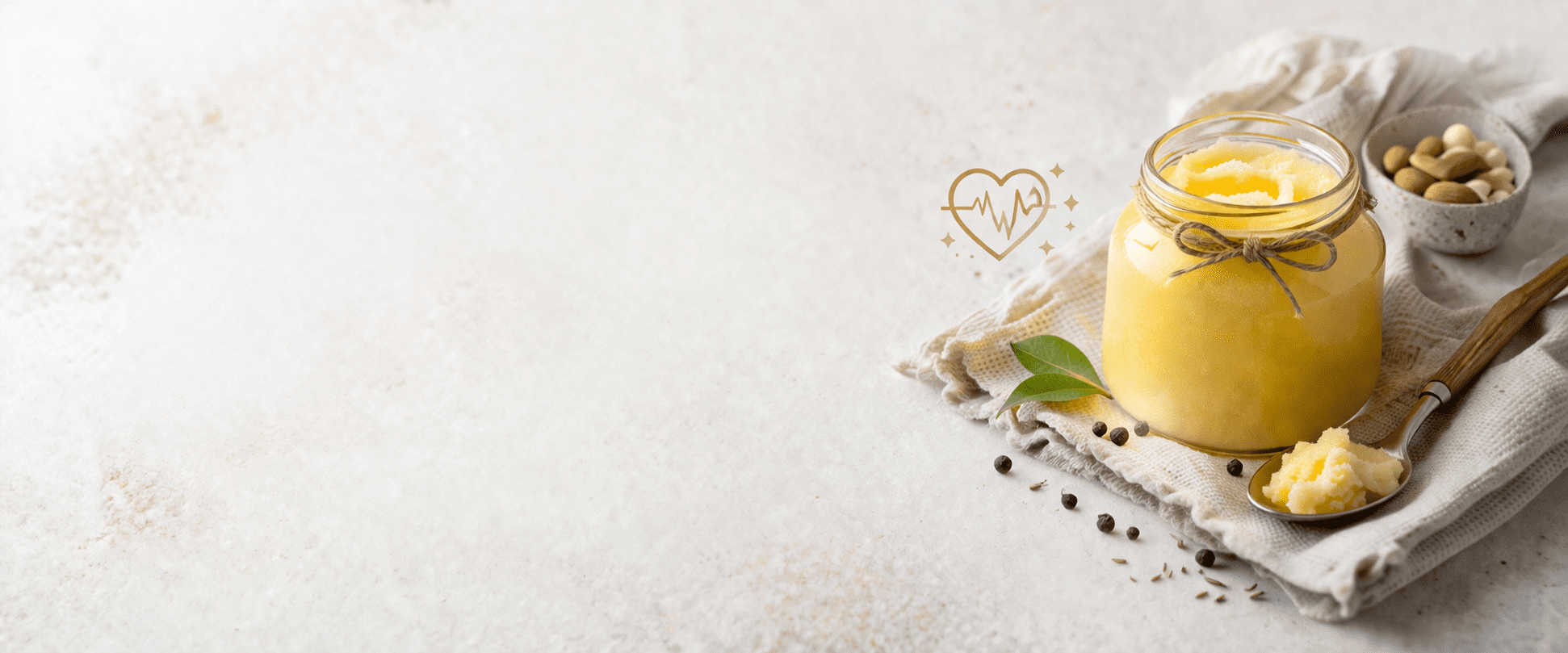
Desi ghee holds a sacred place in Indian households. From drizzling it over hot dal to using it for traditional remedies, it is deeply woven into our daily lives and dietary habits. However, as we cross our 30s and start monitoring our cholesterol and blood pressure, a pressing question often arises: is ghee actually safe for the heart?
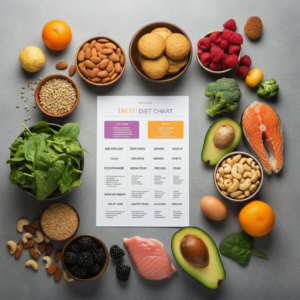
For decades, we were told that all saturated fats cause heart disease, leading many to banish ghee from their kitchens entirely. Recently, the pendulum has swung the other way, with some wellness trends claiming ghee is a magical superfood that cures everything. The truth lies somewhere in the middle. If you are dealing with cardiovascular issues, integrating the right fats into a properly structured diet chart for heart patients is absolutely essential for your long-term well-being.
This article explores the real impact of ghee on your heart, breaking down the scientific facts, addressing common myths, and helping you make informed decisions about your daily nutrition.
The Nutritional Value of Ghee
To understand how ghee affects the body, we first need to look at what it actually contains. Ghee is essentially clarified butter. The simmering process removes water and milk solids, leaving behind pure fat. This makes it suitable for people with lactose intolerance, but it also means it is highly calorie-dense.
A typical tablespoon of ghee contains:
- High levels of saturated fat: About 60% of the fat in ghee is saturated.
- Fat-soluble vitamins: It is a natural source of vitamins A, D, E, and K, which play crucial roles in immune function, skin health, and calcium absorption.
- Butyric acid: This short-chain fatty acid promotes gut health and helps reduce inflammation in the digestive tract.
- Conjugated Linoleic Acid (CLA): Some studies suggest CLA can help reduce body fat and support immune function.
While these nutrients are beneficial, the high concentration of saturated fat is the primary reason medical professionals urge caution, especially for individuals with existing cardiovascular concerns.
Ghee and Cholesterol: What Science Says
The relationship between dietary cholesterol, saturated fat, and heart disease is highly debated. For a long time, doctors advised strict avoidance of all saturated fats. Today, modern science provides a more nuanced view.
Consuming ghee can increase your High-Density Lipoprotein (HDL), commonly known as the “good” cholesterol. HDL helps carry cholesterol away from your arteries and back to your liver, which is beneficial for heart health. However, because ghee is dense in saturated fats, it also raises Low-Density Lipoprotein (LDL), the “bad” cholesterol. High levels of LDL can lead to plaque buildup in your arteries, increasing the risk of blockages, heart attacks, and strokes.
For a healthy, active individual, a moderate amount of ghee does not automatically lead to heart disease. The body requires healthy fats for hormone production and cellular function. But if you already have elevated cholesterol, hypertension, or a family history of heart disease, excess saturated fat can worsen your condition. This is why consulting a professional to create a personalized nutrition plan is far more effective than following generic advice on the internet.
How Much Ghee is Safe for Heart Patients?
Moderation is the key to incorporating any fat into your meals. For healthy adults with an active lifestyle, 1 to 2 teaspoons of desi ghee per day is generally considered safe.
However, the rules change if you are actively managing a heart condition. For individuals with high blood pressure or high cholesterol, the American Heart Association recommends limiting saturated fat to less than 6% of your total daily calories. In practical terms, this means relying mostly on plant-based oils and severely restricting sources like ghee, butter, and high-fat dairy.
If you truly love the flavor of ghee, you might safely consume half a teaspoon occasionally to flavor a bowl of dal or a roti. It should not be used as your primary cooking medium for deep-frying or daily sautéing. Balancing your fat intake requires strategic planning, which is why a customized approach from experts like The Eat Well Plate can make a significant difference in your health journey.
Who Should Completely Avoid Ghee?
While moderate ghee consumption works for some, certain individuals should remove it from their daily diets entirely to prevent severe complications. You should strictly avoid ghee if you fall into any of the following categories:
- Individuals with severe Coronary Artery Disease (CAD): If you already have blockages in your heart, adding extra saturated fat to your bloodstream is highly risky.
- People with dangerously high LDL cholesterol: If your lipid profile shows alarmingly high levels of bad cholesterol or triglycerides, you need to stick to unsaturated fats.
- Those recovering from a recent heart attack or stroke:Post-cardiac event recovery requires a strict, low-saturated-fat clinical diet to prevent a recurrence.
- Individuals struggling with severe obesity and heart complications: Ghee is incredibly calorie-dense. A single tablespoon contains around 120 calories. For those needing to lose weight to reduce cardiac strain, these empty calories can hinder progress.
Best Alternatives to Ghee for Heart Health
If you need to cut back on ghee, Indian kitchens easily accommodate several heart-friendly alternatives. Replacing saturated fats with unsaturated fats (monounsaturated and polyunsaturated fats) actively lowers your LDL cholesterol and reduces your risk of cardiovascular events.
Consider integrating these healthier oils into your cooking:
- Mustard Oil (Sarson ka Tel): A staple in many Indian homes, mustard oil has a good ratio of monounsaturated fatty acids (MUFA) and polyunsaturated fatty acids (PUFA), making it excellent for heart health.
- Olive Oil: Extra virgin olive oil is packed with antioxidants and MUFA. While it is not ideal for deep-frying at high temperatures, it is perfect for light sautéing or salads.
- Rice Bran Oil: Known for its high smoke point and a compound called oryzanol, rice bran oil helps lower cholesterol absorption and is a great choice for traditional Indian cooking.
- Groundnut Oil: Cold-pressed peanut oil contains resveratrol and healthy fats that protect the cardiovascular system.
Remember, even healthy oils are dense in calories. Portion control is essential regardless of the cooking medium you choose.
Why You Need a Customized Diet Chart for Heart Patients
Managing high blood pressure and cholesterol goes far beyond just reducing your ghee intake. It involves a complete lifestyle shift, focusing on sodium reduction, fiber increase, and balanced macronutrients. Trying to navigate this alone can be confusing and overwhelming.
This is where The Eat Well Plate steps in. As trusted dietitians specializing in therapeutic nutrition, we understand that every individual’s body, lifestyle, and medical history is unique. We focus on sustainable, practical habit changes rather than extreme, restrictive dieting.
By working with an expert, you receive a highly specific, tailored nutrition plan that incorporates the foods you love while prioritizing your cardiovascular health. If you are struggling with hypertension, exploring a professional diet plan for blood pressure is the safest and most effective way to manage your condition long-term.
Frequently Asked Questions (FAQs)
Is homemade desi ghee better than store-bought ghee for the heart?
Homemade desi ghee is generally purer and free from the hidden trans fats or preservatives sometimes found in commercial brands. However, it still contains high amounts of saturated fat. Heart patients must consume it in strict moderation, regardless of whether it is made at home or bought from a store.
Can I include ghee in a diet chart for heart patients?
Yes, but in very limited quantities. A professional diet chart for heart patients might allow half a teaspoon of ghee occasionally for flavor, depending on your current lipid profile. It should never be used as the primary cooking oil for your daily meals.
Does ghee cause high blood pressure?
Ghee itself does not directly cause high blood pressure. However, overconsuming calorie-dense fats can lead to weight gain and arterial plaque buildup (atherosclerosis). These conditions force the heart to pump harder, which ultimately raises blood pressure over time.
Which is better for the heart: butter or ghee?
Ghee is slightly better than regular butter because it lacks milk solids and has a higher smoke point, preventing the release of free radicals during cooking. However, both are high in saturated fats, so heart patients should limit both and prefer plant-based oils like mustard or olive oil.
Can a proper diet reverse heart blockages?
While diet alone cannot completely reverse severe calcified blockages, a strict heart patients diet chart can halt the progression of plaque buildup, reduce inflammation, and significantly lower the risk of future cardiac events. Always follow a diet prescribed by a clinical dietitian alongside your doctor’s medical advice.
Should I stop eating all fats if I have heart disease?
No. Your body needs fats to function properly. The goal is to replace harmful saturated and trans fats with healthy unsaturated fats found in nuts, seeds, avocados, and oils like rice bran and olive oil. Complete fat restriction is neither sustainable nor healthy.
Take the Next Step for Your Heart Health
Navigating heart health in an environment full of tempting traditional foods can be challenging. You do not have to give up the joy of eating to protect your heart, but you do need a strategic, scientifically backed approach to your daily meals.
If you are dealing with high cholesterol, hypertension, or a family history of cardiovascular disease, do not wait for a medical emergency to change your eating habits. At The Eat Well Plate, we specialize in helping individuals across India manage their conditions naturally through balanced, locally sourced nutrition.
Take control of your cardiovascular wellness today. Reach out to The Eat Well Plate to get your personalized diet chart for heart patients, and start building sustainable habits that will protect your heart for years to come.