
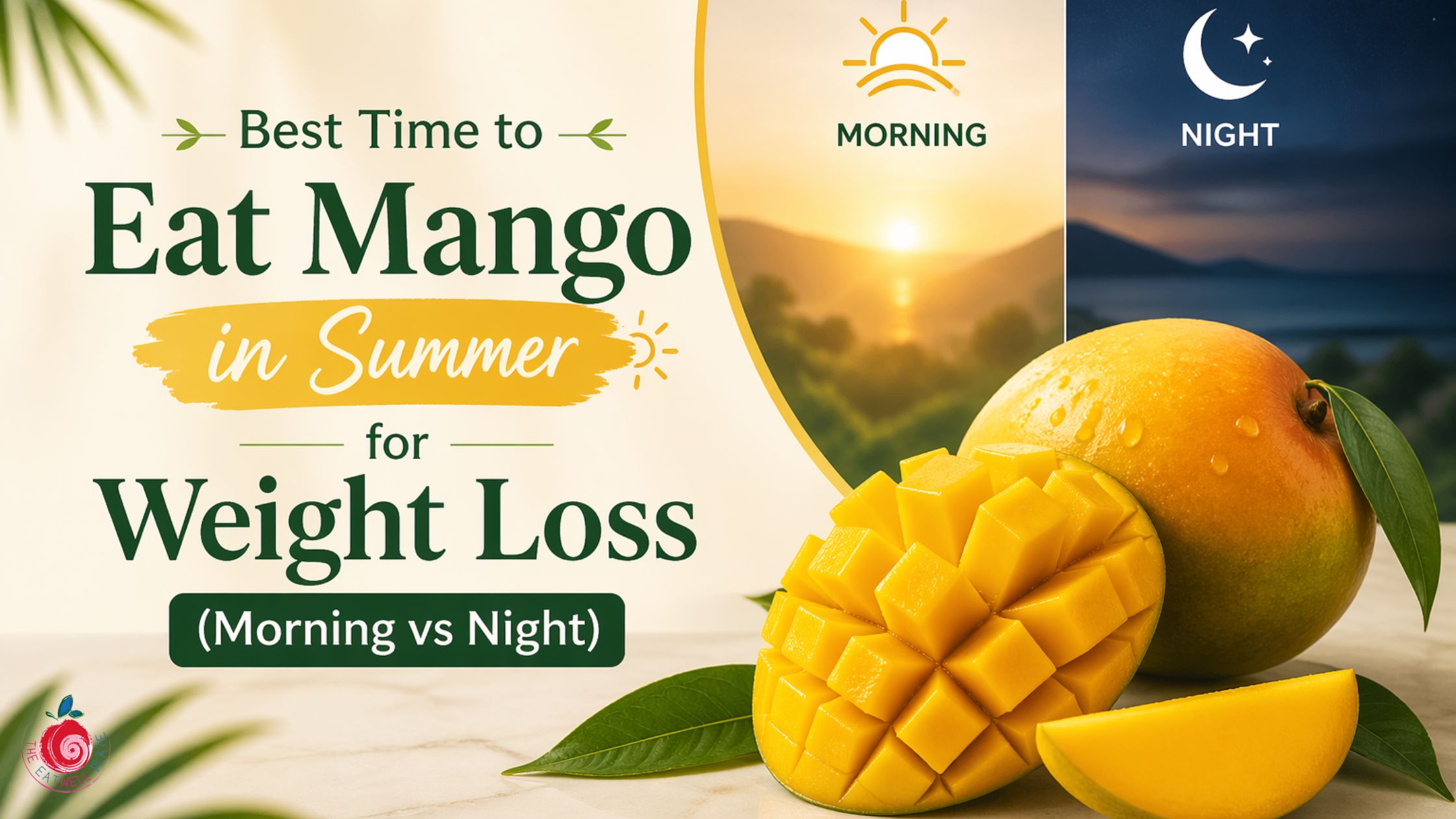
Summer in India brings a familiar dilemma. The markets are flooded with sweet, juicy mangoes, but fitness enthusiasts often avoid them completely. People naturally worry that eating mangoes will instantly lead to weight gain, a fear stemming from the fruit’s natural sugars.
However, cutting the king of fruits out of your summer routine is entirely unnecessary. You can absolutely enjoy mangoes while successfully shedding fat. The secret lies in understanding portion sizes, pairing your foods correctly, and figuring out the best time to eat mango for weight loss. Let us explore how you can keep mango in your summer diet without compromising your health goals.
Mango Nutrition and Calories
Before you add mango to your daily routine, you should understand what you are consuming. Mangoes are packed with essential vitamins, minerals, and antioxidants that support immune health and digestion.
Here is a simple breakdown of the nutritional value of one cup (approximately 165 grams) of sliced mango:
| Nutrient | Amount |
| Calories | 99 kcal |
| Protein | 1.4 grams |
| Carbohydrates | 24.7 grams |
| Dietary Fiber | 2.6 grams |
| Natural Sugar | 22.5 grams |
| Fat | 0.6 grams |
While the mango calories are relatively moderate, the high carbohydrate and natural sugar content means you need to be mindful of when and how you eat it.
When is the Best Time to Eat Mango for Weight Loss?
Timing plays a massive role in how your body processes sugar and stores fat. If you want to use mango for weight loss, you need to time your consumption to match your body’s energy needs.
Morning
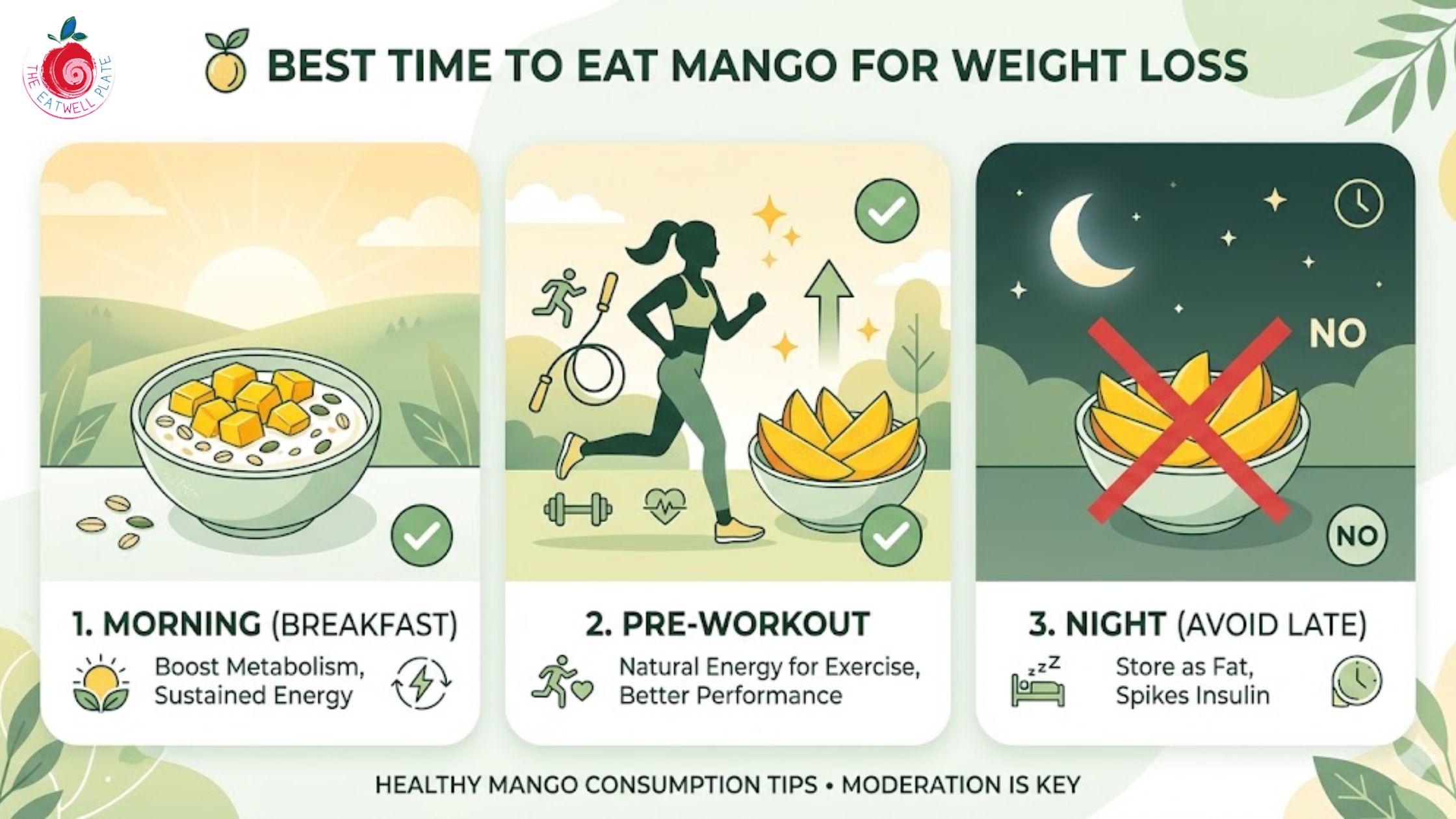
Eating mango in the morning is highly recommended. Your metabolism is naturally higher early in the day, and your body needs energy to kickstart its functions. Having a portion of mango with your breakfast gives you a quick energy boost, and you have the entire day to burn off those calories.
Pre-Workout (Afternoon)
Another excellent time to consume mango is 30 to 45 minutes before a workout. The natural sugars provide a quick, easily digestible source of energy that will fuel your exercise session. You will burn the carbohydrates immediately, preventing them from being stored as fat.
Night
Eating mango late in the evening or right before bed is not ideal. Since your physical activity decreases at night, your body does not need the quick energy that a mango provides.
Can We Eat Mango at Night?
The short answer is no; you should avoid eating mango at night if weight loss is your primary goal.
Consuming high-sugar fruits before sleeping causes a rapid spike in your blood sugar levels. Because you are resting, your body does not burn this glucose for energy. Instead, the excess sugar is more likely to be stored as fat. Furthermore, digestion slows down during sleep, and eating a heavy, sweet fruit can cause bloating, acid reflux, or disrupted sleep patterns. Stick to consuming your mangoes before 5:00 PM for the best results.
Portion Control: How Much Mango is Safe?
Even healthy foods can cause weight gain if eaten in massive quantities. When dealing with mango in a summer diet, portion control is your best friend.
A safe limit is one small to medium-sized mango (about 150 to 200 grams) per day. Instead of eating two or three mangoes in one sitting, stick to a single serving. You should also eat the fruit whole rather than juicing it. Mango juice strips away the beneficial dietary fiber, leaving you with a concentrated glass of sugar that will quickly spike your insulin levels.
How to Include Mango in a Diet Plan for Weight Loss
Incorporating mango into your routine is easy if you balance it with protein and healthy fats. This slows down the absorption of sugar into your bloodstream, keeping you full for longer.
If you want a structured approach, you might want to look into a professional diet plan for weight loss. Working with a certified dietitian can help you seamlessly integrate your favorite foods into your daily meals without derailing your progress.
Sample Summer Diet Plan
Here is a simple way to include mango in your daily routine:
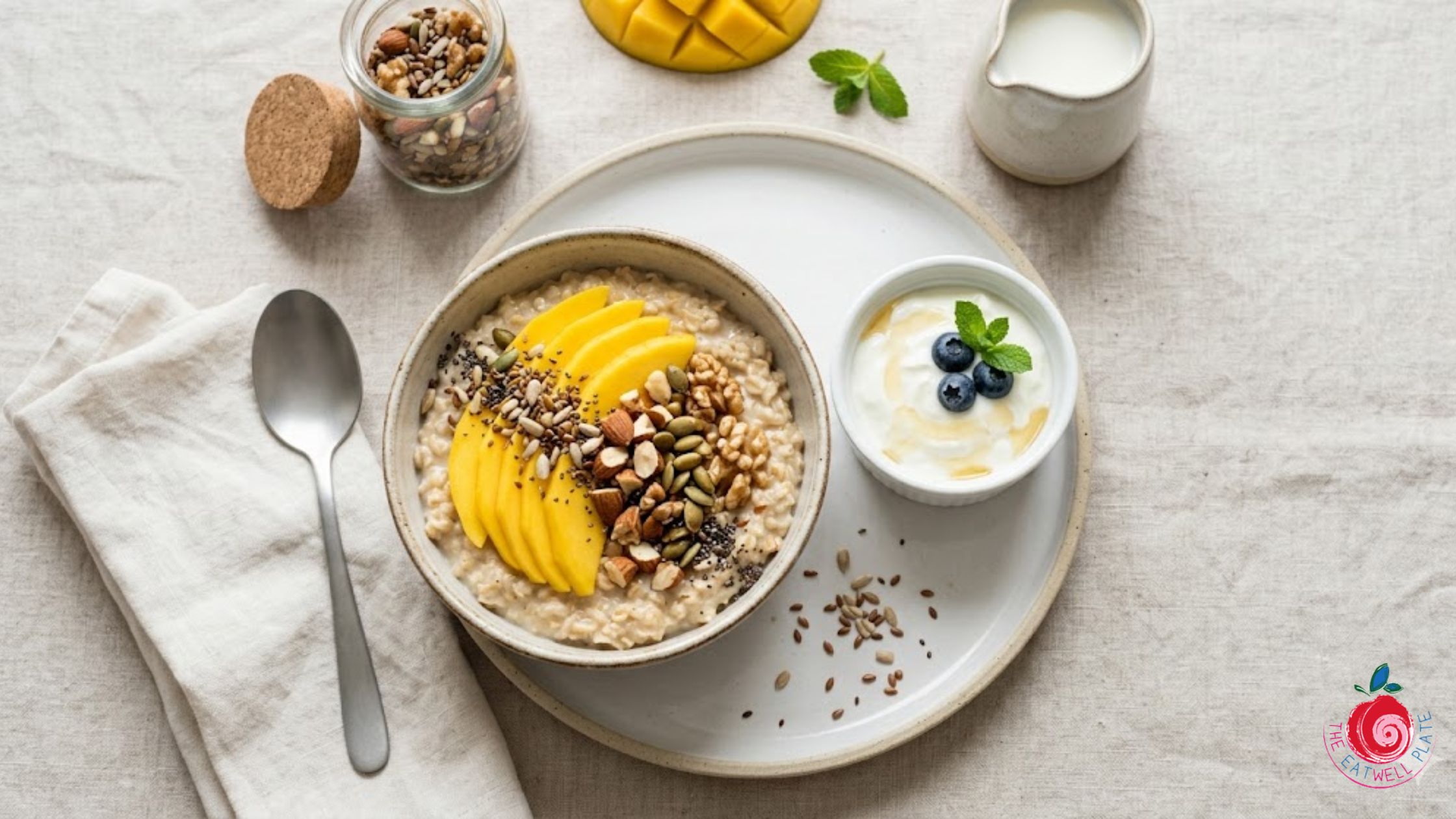
- Breakfast: A bowl of oats made with skim milk, topped with a handful of almonds and half a cup of diced mango.
- Mid-Morning Snack: One boiled egg or a small bowl of Greek yogurt.
- Lunch: Two multigrain rotis, a bowl of dal, seasonal mixed vegetables, and a side salad.
- Pre-Workout Snack: The remaining half cup of diced mango.
- Dinner: Grilled chicken or paneer, a large bowl of vegetable soup, and a small portion of quinoa.
Common Mistakes to Avoid
Many people struggle to lose weight during the summer not because of the mango itself, but because of how they consume it. Watch out for these common mistakes:
- Eating it with heavy meals: Having a mango as a dessert immediately after a large lunch or dinner adds unnecessary calories to your meal. Treat it as a standalone snack instead.
- Mixing it with added sugar: Aamras, mango milkshakes, and mango ice creams often contain heavy amounts of added refined white sugar. Always eat the fruit in its natural, raw form.
- Ignoring total daily calories: A mango fits into a weight loss diet only if you maintain an overall calorie deficit. If you eat a mango on top of a surplus calorie diet, you will gain weight.
Mango for PCOD and Hormonal Balance
Women managing Polycystic Ovary Disease (PCOD) are often told to avoid all sweet fruits to prevent insulin spikes. However, you do not need to banish mangoes entirely.
The key for women with PCOD is maintaining a low glycemic load. You can achieve this by pairing a small portion of mango with a handful of walnuts, almonds, or pumpkin seeds. The healthy fats and protein from the nuts slow down the sugar spike, making it safer for your insulin levels.
Make Smart Choices This Summer
You do not have to choose between reaching your fitness goals and enjoying your favorite summer fruit. By keeping your portions in check, eating the fruit whole, and choosing the morning or pre-workout window as the best time to eat mango for weight loss, you can enjoy the best of both worlds.
If you are confused about including mango in your diet or want a personalized diet plan for weight loss, you can consult the experts at The Eat Well Plate, the best dietitian in Chandigarh, for a customized plan based on your body type and goals.
Frequently Asked Questions (FAQs)
Q1. Does mango increase belly fat?
Mango itself does not target belly fat. Weight gain in the abdominal area happens when you consume more calories than you burn overall. As long as you maintain a calorie deficit and control your portion sizes, mango will not cause belly fat.
Q2. Can I drink mango shake during weight loss?
It is better to avoid mango shakes. Milkshakes are usually made with full-fat milk and extra sugar, which significantly increases the calorie count. Eating the fruit whole provides dietary fiber that keeps you full and aids digestion.
Q3. Is it safe to eat mango on an empty stomach?
Yes, eating mango on an empty stomach in the morning is generally safe and provides a great energy boost. However, if you have severe acidity, you might want to pair it with a few soaked almonds.
Q4. How many calories are in one whole mango?
A standard medium-sized mango (around 200 grams of flesh) contains roughly 120 to 150 calories.
Q5. Does mango contain a lot of sugar?
Yes, a cup of mango contains about 22 grams of natural sugar. While this is natural fructose and not processed sugar, it still contributes to your daily carbohydrate and calorie intake, which is why portion control is vital