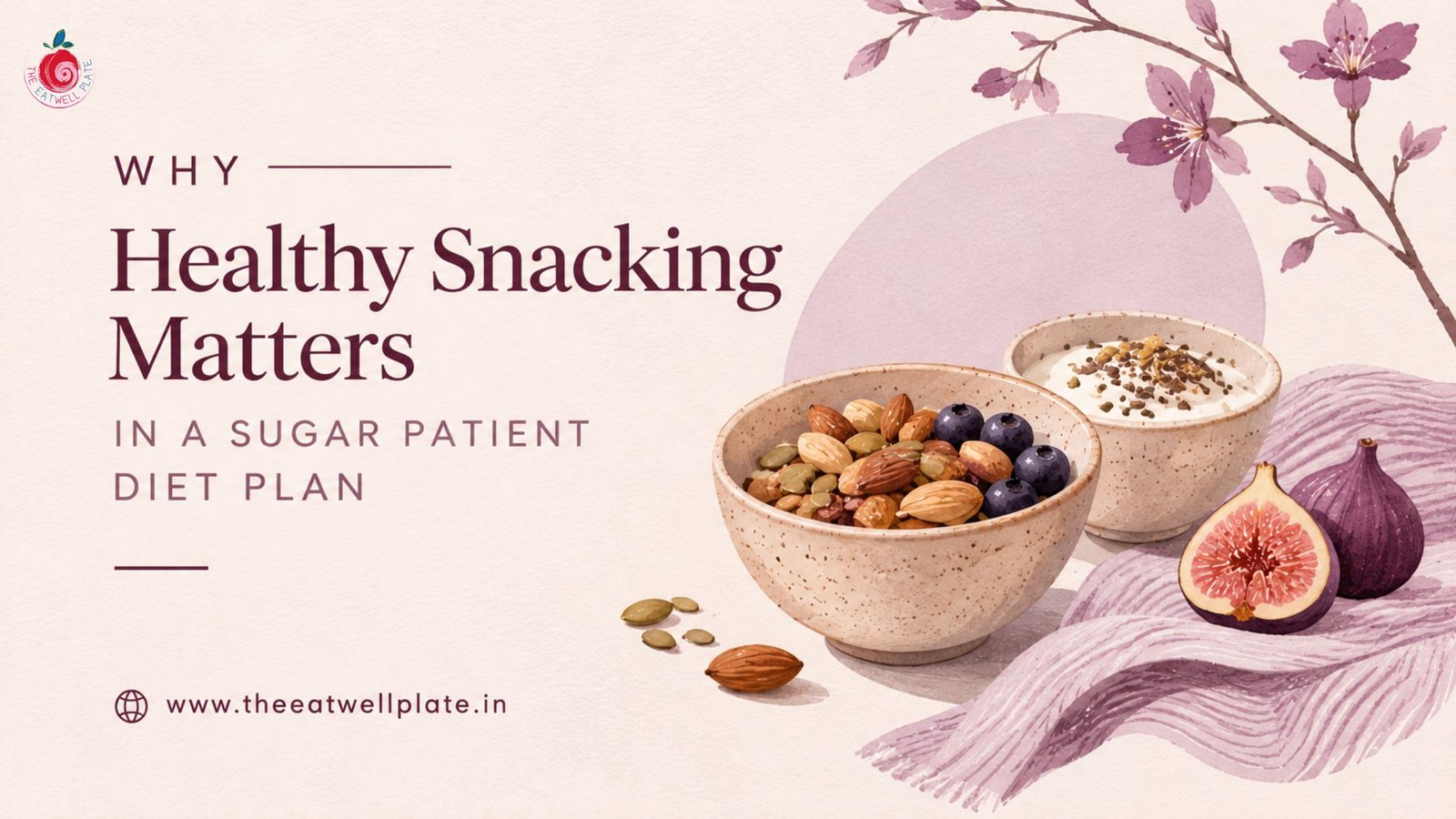
Snack choices directly influence hunger, carbohydrate intake, and blood glucose patterns throughout the day. A well-designed Sugar Patient Diet Plan treats snacking as an individual decision, not a mandatory habit, and prioritizes fibre, protein, and portion awareness over blanket food restrictions. Choosing balanced, minimally processed snacks can support steadier energy levels, while professional nutrition guidance helps tailor these choices to personal health needs.
Most people managing diabetes focus heavily on main meals while overlooking what happens between them. However, the snacks eaten mid-morning, in the afternoon, or late at night can quietly shape blood sugar trends just as much as breakfast, lunch, or dinner. Because of this, snacking deserves a thoughtful place within any Sugar Patient Diet Plan rather than being treated as an afterthought.
This article explores why snack choices matter for people managing diabetes, what makes a snack genuinely balanced, and which everyday Indian foods can support better outcomes. It also looks at common habits worth reconsidering and explains how personalized nutrition guidance from The EatWell Plate can make the process easier.
What Makes Healthy Snacking Important for People with Diabetes?
Every snack contributes carbohydrates, calories, and nutrients to the day’s total intake. Therefore, even small, seemingly harmless snacks can influence blood glucose levels if eaten without attention to portion size or composition.
For working professionals who rely on packaged snacks between meetings, or for families planning meals for a diabetic member, understanding this connection is essential. A thoughtfully built Sugar Patient Diet Plan accounts for these smaller eating occasions, not just the three main meals of the day.
Besides that, poor snack choices often lead to unpredictable hunger patterns. Highly refined snacks can cause a quick rise in blood sugar followed by an equally quick drop, leaving a person hungrier sooner than expected. As a result, people may reach for another snack shortly after, creating a cycle that makes blood sugar management more difficult.
Does Every Person with Diabetes Need Snacks Between Meals?
Not necessarily. This is one of the most common misconceptions about diabetes nutrition. Snacking is not compulsory for everyone, and it should never be assumed that frequent eating automatically prevents blood sugar spikes.
Whether snacks are needed depends on several individual factors:
- Hunger levels and appetite patterns
- Daily activity and routine
- Type and timing of medication
- Individual blood glucose response throughout the day
For example, someone on certain glucose-lowering medications may need a scheduled snack to avoid low blood sugar, while another person with a different routine may do well with just three balanced meals. Unnecessary snacking, especially of calorie-dense or refined foods, can add extra carbohydrates and calories without any real benefit.
This is exactly why a generic approach rarely works. A personalized Sugar Patient Diet Plan considers these individual differences rather than applying the same snacking rule to everyone.
What Should a Balanced Diabetes-Friendly Snack Include?
A balanced snack typically combines a carbohydrate source with protein, fibre, or healthy fats. This combination slows digestion, which can help moderate how quickly glucose enters the bloodstream after eating.
Fibre plays a particularly useful role. High-fibre snacks for diabetes tend to promote fullness, support digestive health, and may contribute to steadier post-snack glucose readings compared to refined, low-fibre options. Protein-rich snacks for diabetics work similarly, helping to extend satiety between meals.
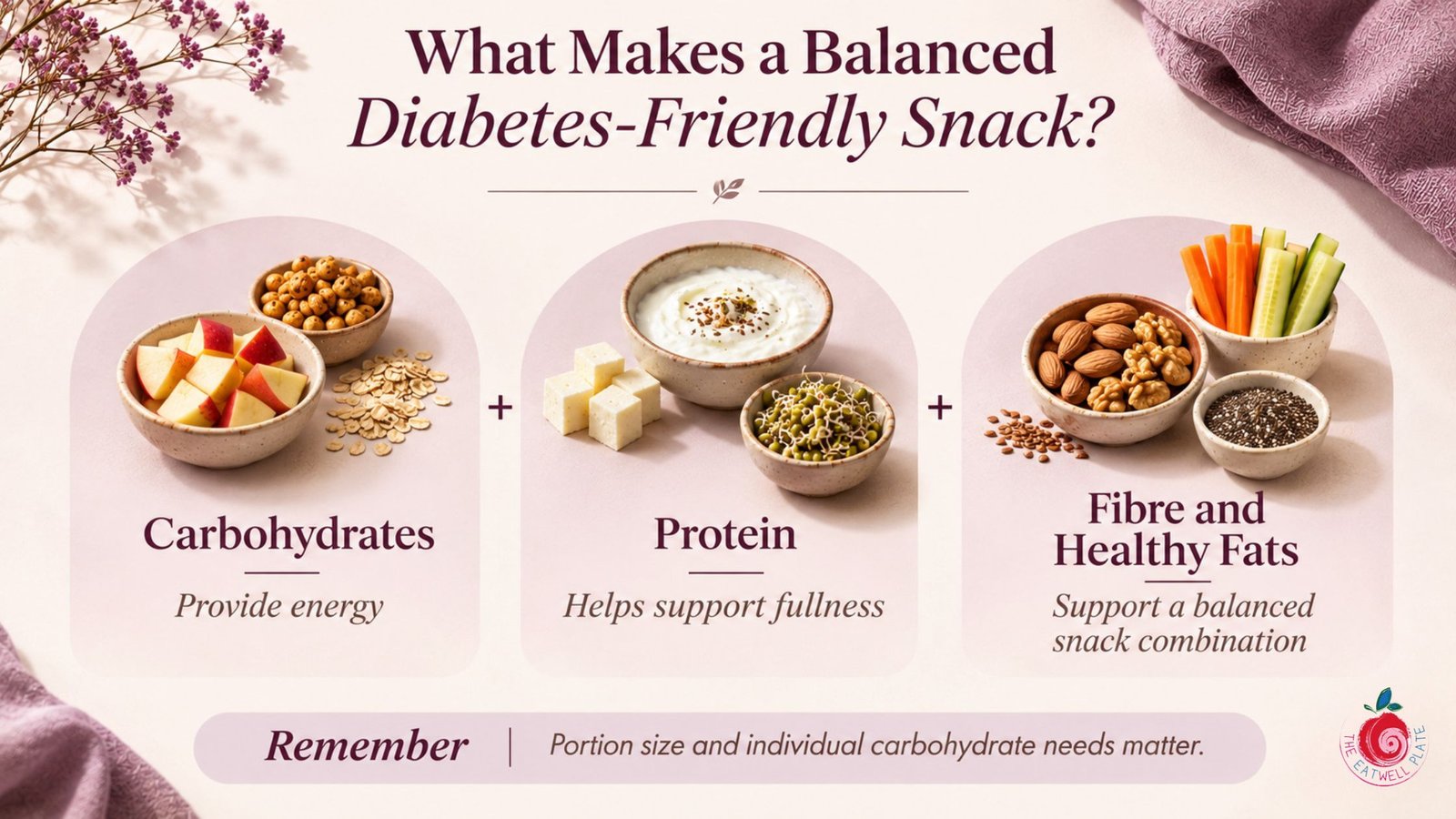
However, portion size still matters, even for nutritious foods. A large portion of nuts or a sizeable bowl of fruit can add up in calories and carbohydrates despite being healthy choices individually. Therefore, portion control for diabetes is just as important as choosing the right ingredients.
Where practical, whole and minimally processed foods are generally a better foundation for snacking than heavily packaged alternatives, simply because they usually contain fewer additives and less refined sugar.
Healthy Indian Snack Options for People Managing Blood Sugar
India offers a wide variety of naturally suitable ingredients that can be turned into diabetes-friendly snacks with a little planning. Below are some examples commonly recommended as part of a Sugar Patient Diet Plan, though suitability can vary from person to person.
- Roasted chana: A good source of plant protein and fibre, best enjoyed in a measured portion.
- Unsalted almonds and walnuts: Offer healthy fats and modest protein, though they are calorie-dense.
- Plain curd or unsweetened Greek yoghurt: Provides protein and calcium without added sugar.
- Cucumber and carrot sticks: Add fibre and volume with very few calories.
- Hygienically prepared sprouts: A fibre and plant-protein option, provided they are stored and prepared safely.
- Small portions of boiled chana or moong: Combine protein and fibre in an easy-to-prepare form.
- Whole fruit paired with nuts or plain curd: Balances fruit carbohydrates with protein or fat.
- Paneer cubes in suitable portions: A protein source, though fat and sodium content should be considered.
- Homemade vegetable-based snacks: Allow better control over oil, salt, and ingredients compared to packaged versions.
- Unsweetened buttermilk: A light, hydrating option with some protein content.
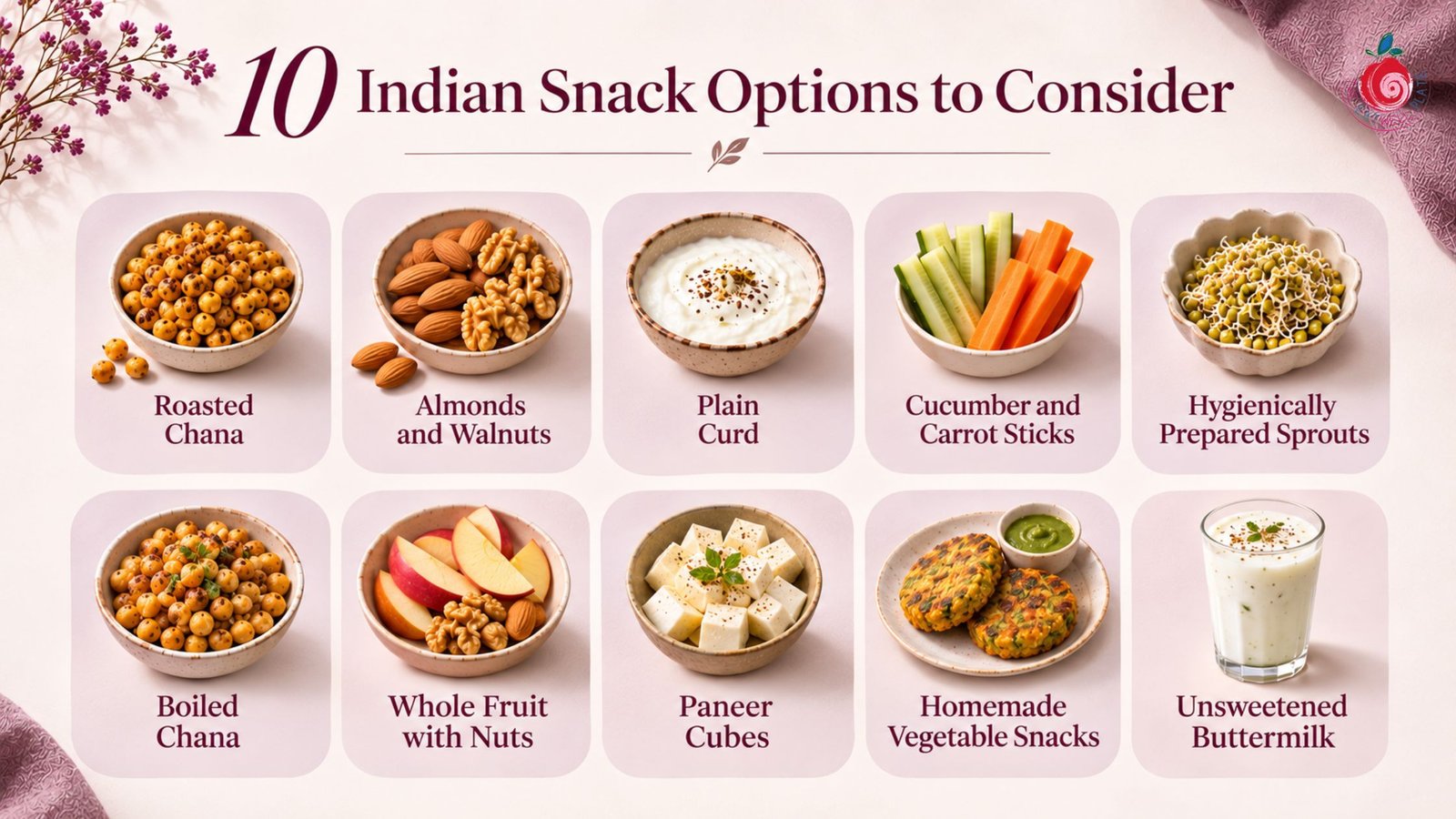
These healthy Indian snacks for diabetics are generally more supportive of blood sugar management than heavily processed alternatives, but even these foods still contain calories or carbohydrates. As a result, the right portion and the right combination remain important considerations.
Common Snacking Habits That Can Affect Blood Sugar Management
Certain everyday snacking habits are worth reconsidering, particularly when they happen frequently or in large portions. These include:
- Biscuits and cream-filled cookies
- Sugary packaged snacks
- Sweetened yoghurt
- Namkeen and fried snacks
- Cakes, pastries, and sweets
- Sugar-sweetened beverages
- Packaged fruit juices
- Highly refined snack products
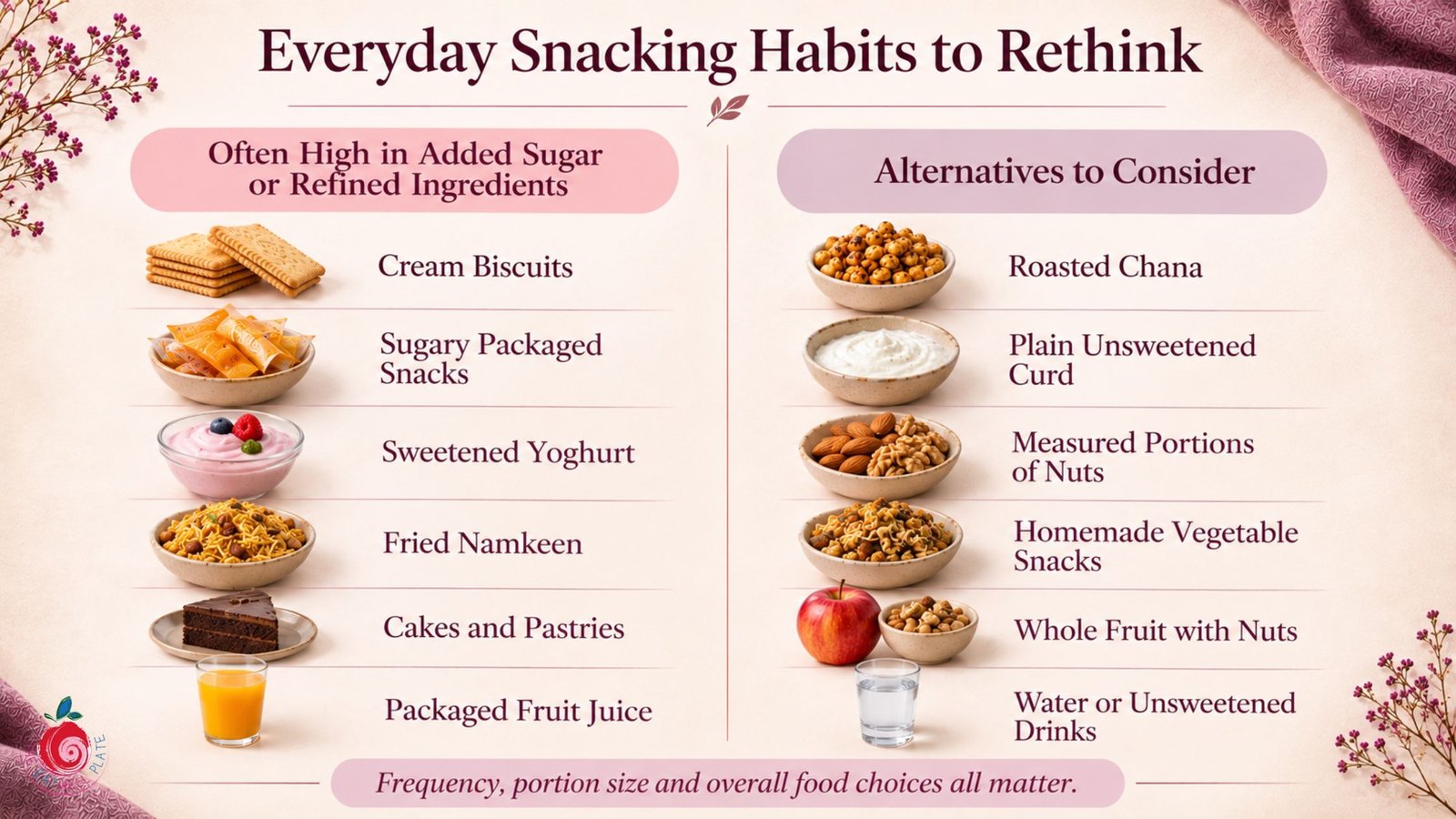
It would be inaccurate to label these foods as universally forbidden. Instead, their impact depends largely on frequency, portion size, and overall nutritional composition. For instance, an occasional small treat affects blood sugar differently than daily consumption of the same item in a large quantity.
For this reason, low-sugar snacks and diabetes-friendly Indian foods are generally encouraged as regular choices, while the items above are better reserved for occasional, mindful consumption rather than daily habits.
How Portion Awareness and Food Labels Help
Reading food labels is one of the most practical skills for anyone building a Sugar Patient Diet Plan around packaged snacks. A few label details deserve particular attention:
- Total carbohydrates: This figure reflects the full carbohydrate load, not just sugar content.
- Added sugars: Listed separately from naturally occurring sugars, these contribute directly to blood glucose response.
- Fibre content: Higher fibre can help offset some of the impact of carbohydrates.
- Serving size: Many packages contain more than one serving, which can be easy to overlook.
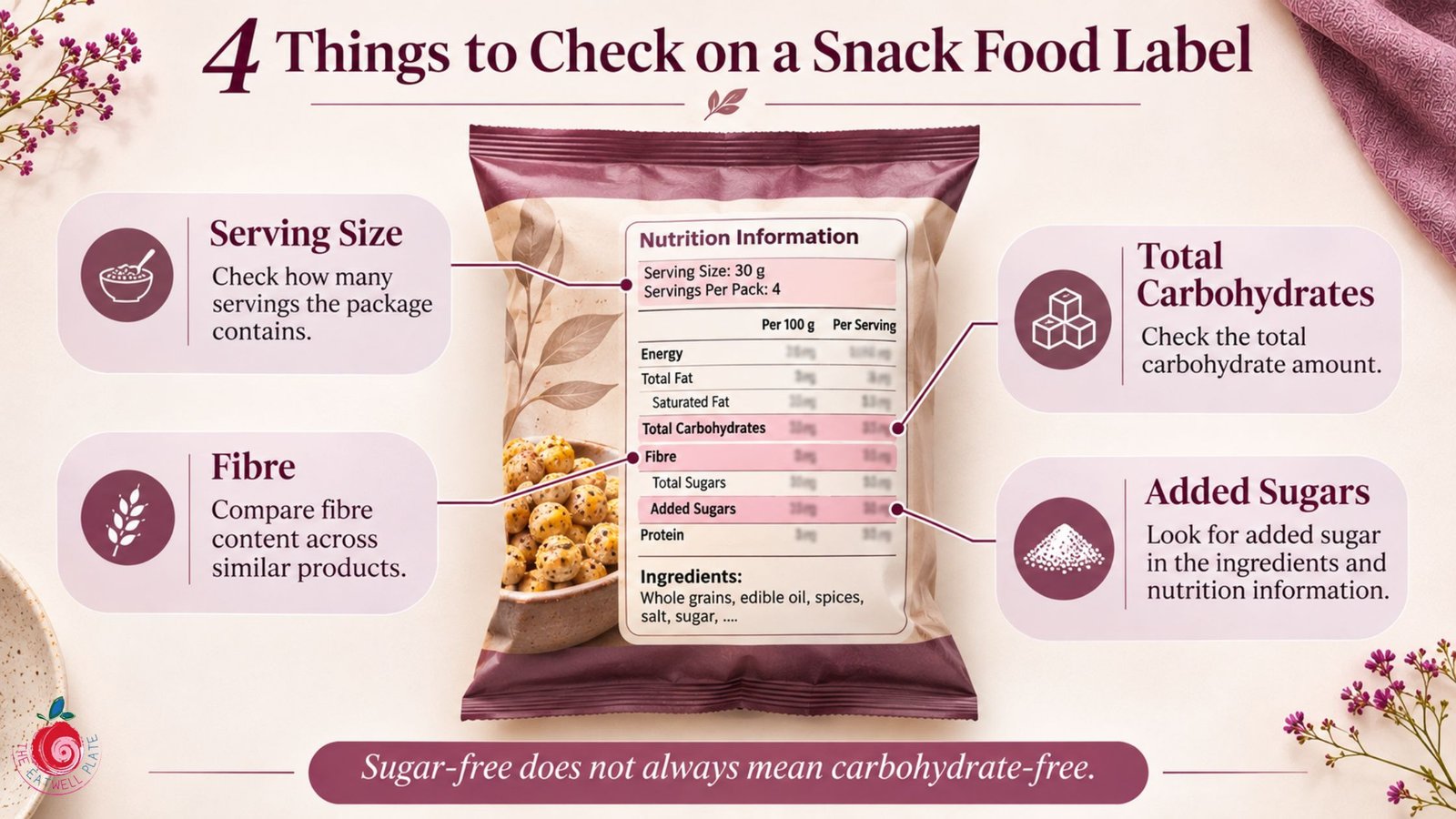
Importantly, a “sugar-free” label does not always mean a product is free of carbohydrates or suitable in unlimited amounts. Some sugar-free snacks still contain refined flour or significant carbohydrate content from other sources. Comparing labels across similar products before purchasing can make a meaningful difference in daily blood sugar management.
Smart Snacking at Work, While Travelling, and During Busy Days
Working professionals and frequent travellers often default to vending machine snacks or packaged options out of convenience. However, a little preparation can make healthier choices just as accessible.
Carrying roasted chana, a small box of nuts, or cut vegetables in a reusable container takes minimal effort and avoids last-minute reliance on refined, sugary alternatives. Similarly, keeping unsweetened buttermilk or plain curd available during busy days provides a protein-based option without much preparation.
For families planning around a diabetic member’s schedule, batch-preparing simple snacks over the weekend can reduce the temptation to reach for packaged items during a hectic week. These small adjustments, when repeated consistently, support better blood sugar management over time.
How Personalized Nutrition Guidance Can Make Snacking Easier
General snacking advice found online often fails to account for individual medication schedules, activity levels, or specific health conditions. This is where a nutritionist for diabetes management becomes genuinely valuable.
A qualified professional can assess a person’s HbA1c levels, current medications, eating patterns, and daily routine before recommending suitable snack choices. This individualised approach is particularly important for people with additional health considerations, such as kidney disease, who may require specific food adjustments beyond standard diabetes nutrition tips.
It is also worth noting an important safety point: ordinary healthy snacks are not a treatment for low blood sugar. Suspected hypoglycaemia requires the fast-acting carbohydrate treatment advised by a person’s own care team, not a high-fibre snack. People taking insulin or certain glucose-lowering medicines should always follow their healthcare professional’s specific guidance regarding snack timing, and no one should adjust their medicine or insulin dose without medical advice.
Comparing Common Snack Choices
The table below summarises practical considerations for popular snack options often discussed within a Sugar Patient Diet Plan.
| Snack Choice | Nutritional Advantage | What to Keep in Mind |
| Roasted chana | Provides plant protein and fibre | Be mindful of portion size |
| Unsalted nuts | Provides healthy fats and some protein | Energy-dense, so avoid large portions |
| Plain curd | Provides protein and calcium | Choose unsweetened varieties |
| Cucumber and carrot sticks | Provide fibre and volume | Pair with a suitable protein source if needed |
| Sprouts | Provide fibre and plant protein | Prepare and store hygienically |
| Whole fruit with nuts | Combines fruit carbohydrates with healthy fats | Choose whole fruit and suitable portions |
| Paneer cubes | Provides protein | Consider fat and sodium content |
| Sweetened packaged snacks | May contain added sugars and refined carbohydrates | Check labels and limit frequent consumption |
No single food in this table should be considered completely safe or unsafe for every person with diabetes. Individual response varies, which is precisely why personalized guidance matters.
How The EatWell Plate Supports Diabetes Nutrition
The EatWell Plate brings more than 12 years of experience in nutrition and diabetes guidance, offering personalized support based on medical history, HbA1c levels, medication, eating habits, and lifestyle. Clients can choose in-person consultations in Chandigarh or online consultations from anywhere in India.
Rather than offering generic advice, the team works with each individual to build carbohydrate awareness, practice portion control, and identify practical food swaps that fit real-life routines. Ongoing follow-up support and progress monitoring help ensure that a Sugar Patient Diet Plan continues to work as circumstances change. Additional lifestyle guidance covering activity, stress, sleep, and food-label reading rounds out a well-rounded approach to diabetes management.
For many clients, understanding how snacking fits into their broader eating pattern becomes one of the most practical outcomes of working with a dietitian, since it addresses a part of the day that is often overlooked in self-managed approaches.
Finding the best dietitian in Chandigarh can make all the difference between guesswork and genuine progress in managing blood sugar day to day. Dietitian Sangeeta and the team at The EatWell Plate focus on personalized nutrition guidance that fits real routines, not generic rules copied from the internet. Support includes practical food choices, attention to individual eating habits, and ongoing guidance as circumstances change over time. Clients across Chandigarh, Mohali, and Panchkula, along with those joining through online consultations, benefit from a consistent, evidence-informed approach to diabetes nutrition. For anyone ready to build steadier, more confident eating habits, reaching out for a consultation is a practical next step toward better-informed food choices.
Building Better Snacking Habits for Long-Term Well-Being
Thoughtful snacking is not about eliminating entire food groups or memorising rigid rules. Instead, it is about understanding portion sizes, recognising which combinations support steadier energy, and knowing when a snack is genuinely needed. A well-structured Sugar Patient Diet Plan treats these small, everyday decisions with the same care given to main meals, because together they shape overall blood sugar patterns.
Random food restrictions pulled from generic online sources rarely account for an individual’s medication, health history, or daily routine. For this reason, professional nutrition guidance remains one of the most reliable ways to build snacking habits that are both sustainable and suitable for personal needs.
If you would like support building a snacking approach that fits your lifestyle, reach out to The EatWell Plate for a consultation. Dietitian Sangeeta and the team offer both in-person sessions in Chandigarh and online consultations across India.
Contact The EatWell Plate:
Phone: +91 8283820521
Email: support@theeatwellplate.in
Website: theeatwellplate.in
Diabetes nutrition services: theeatwellplate.in/diabetes
Frequently Asked Questions
Q1. Are healthy snacks necessary for every person with diabetes?
No, snacking is not compulsory for everyone with diabetes. The need for snacks depends on individual hunger patterns, activity levels, and medication, so a personalized approach works better than a one-size-fits-all rule.
Q2. Which Indian snacks are suitable for people managing blood sugar?
Options like roasted chana, unsalted nuts, plain curd, cucumber and carrot sticks, and hygienically prepared sprouts are commonly suitable choices. Portion size and individual tolerance should still guide how often and how much is eaten.
Q3. Can nuts and roasted chana be included in diabetes-friendly snacking?
Yes, both can be included as part of a balanced snack routine, as they offer protein, fibre, or healthy fats. However, they are calorie-dense, so moderate portions are recommended rather than unlimited servings.
Q4. How can a nutritionist help with healthier snack choices for diabetes?
A nutritionist can assess medical history, medication, and daily routine to recommend snack choices tailored to individual needs. This personalized guidance helps avoid both unnecessary restriction and unmonitored overeating of otherwise healthy foods.