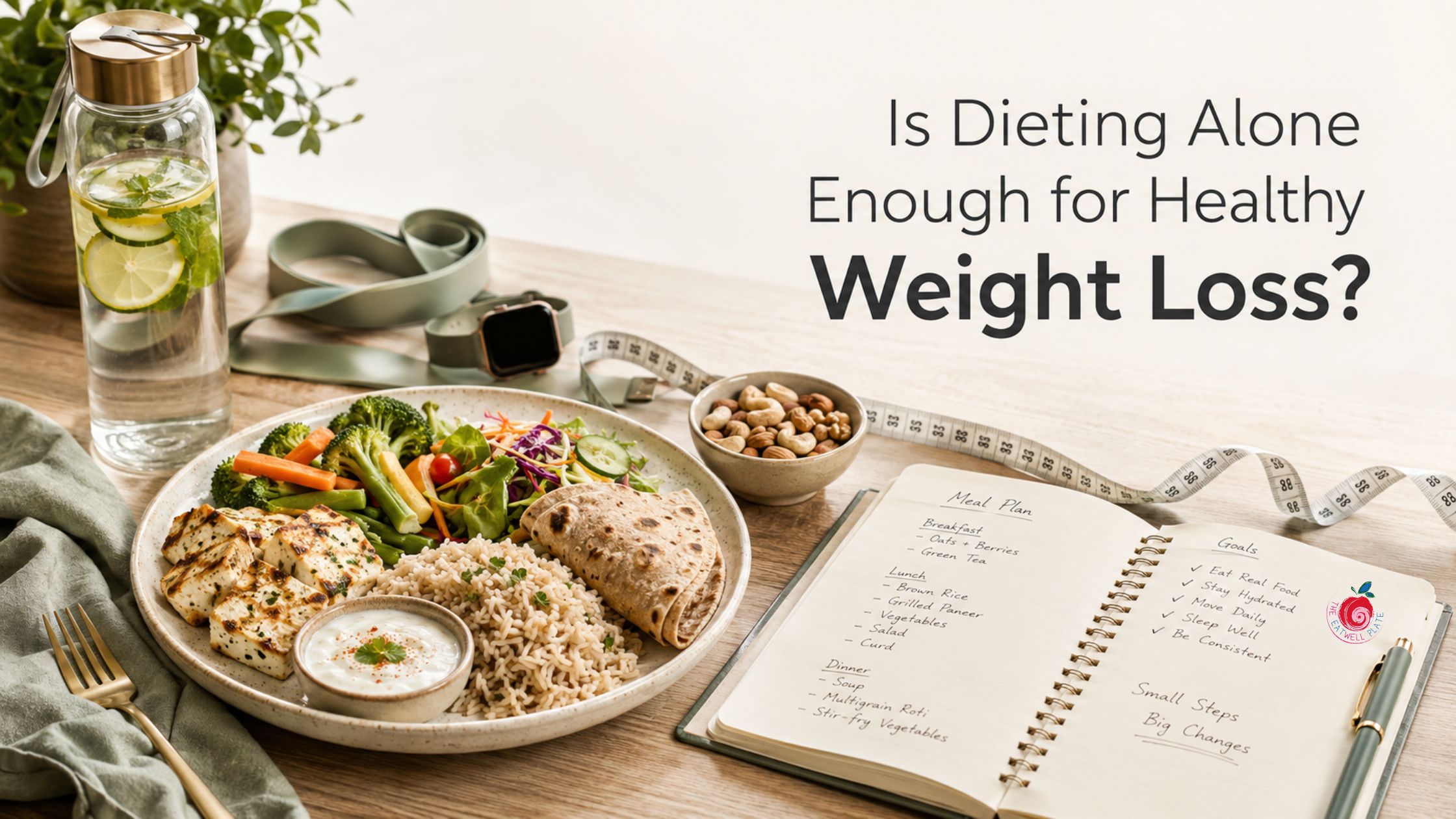
Dieting alone is rarely enough for healthy, sustainable weight loss. While a structured diet chart for weight loss plays an important role, lasting results depend on a combination of balanced nutrition, regular physical activity, quality sleep, stress management, and consistent lifestyle habits—ideally guided by a qualified dietitian.
Many people believe that following a strict diet is the only solution for losing weight. However, healthy weight loss depends on more than just reducing food intake. A balanced approach that includes proper nutrition, lifestyle habits, consistency, and expert guidance plays an important role in achieving sustainable results. Understanding whether a diet chart for weight loss alone is enough can help individuals make better health decisions.
Walk into any gym, scroll through any wellness page, or speak to someone on a weight loss journey—chances are, the conversation starts and ends with food. “I’m cutting carbs.” “I’m only eating salads.” “I’ve started intermittent fasting.” Dieting dominates the weight loss conversation, and for good reason. What you eat matters enormously.
But here is the part that rarely gets enough attention: food is only one piece of a much larger puzzle. Millions of people follow strict weight loss diets and still struggle to see lasting results. That is not a failure of willpower—it is a sign that the approach is incomplete.
This blog explains why a diet plan for weight loss is a necessary starting point, but not a sufficient endpoint. More importantly, it highlights what a truly sustainable weight loss approach looks like, and why working with a professional can make all the difference.
Understanding the Role of a Diet Chart For Weight Loss
A diet chart for weight loss is a structured guide to eating that supports the body’s nutritional needs while creating the conditions for healthy fat loss. Done well, it is not about starvation or elimination. It is about balance.
Structured nutrition guidance helps the body receive the right mix of macronutrients—proteins, carbohydrates, and fats—alongside essential vitamins and minerals. This balance keeps energy levels stable, supports organ function, and prevents the nutrient deficiencies that often come with restrictive eating.
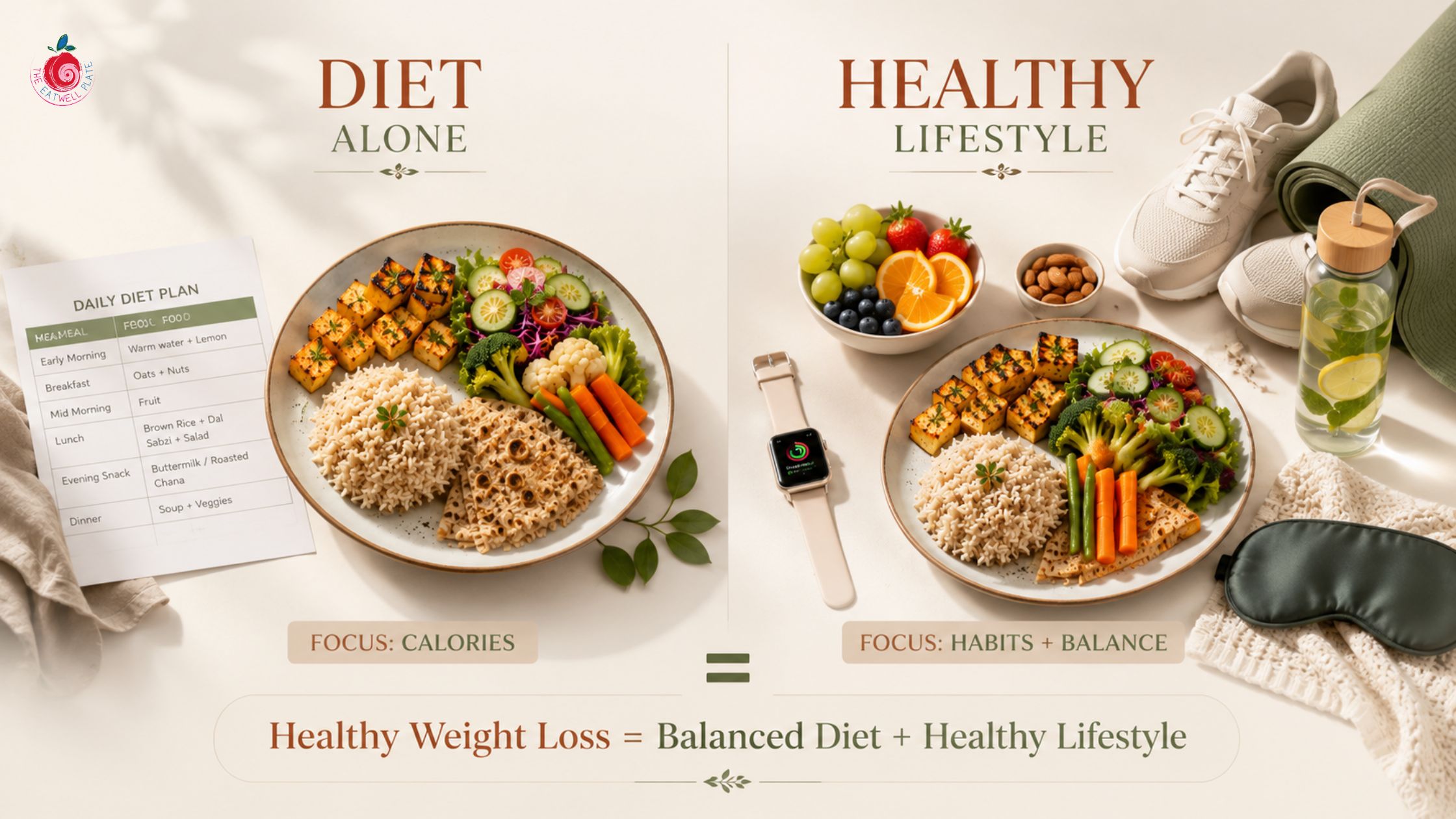
Here is something important to understand: no two people have identical nutritional needs. Age, gender, health conditions, activity levels, hormones, and even gut health all influence how the body responds to food. A diet plan designed for one person may not work for another—and this is precisely why personalized diet plans deliver better outcomes than one-size-fits-all approaches.
A well-constructed weight loss diet does not just tell you what to eat. It accounts for your lifestyle, your preferences, your health history, and your goals. That level of personalisation is difficult to achieve through generic online plans or trending diets.
Why Dieting Alone May Not Give Long-Term Weight Loss Results
This is the question that trips up most people: if I am eating less, why am I not losing weight? Or: why did I lose weight initially, but then plateau—or worse, regain it?
The answer often lies in what dieting alone cannot address.
Lack of consistency is one of the biggest barriers. Many people start a weight loss diet with high motivation, only to find it unsustainable within weeks. When a diet is too restrictive, it becomes difficult to maintain long-term.
Extreme food restrictions can also backfire. Severely cutting calories or eliminating entire food groups may produce short-term results, but the body adapts by slowing metabolism. Over time, this makes further fat loss harder.
Poor lifestyle habits outside of meals—chronic stress, inadequate sleep, sedentary behavior—can undermine even the most carefully designed diet plan for weight loss. These factors directly influence hunger hormones, fat storage, and energy levels.
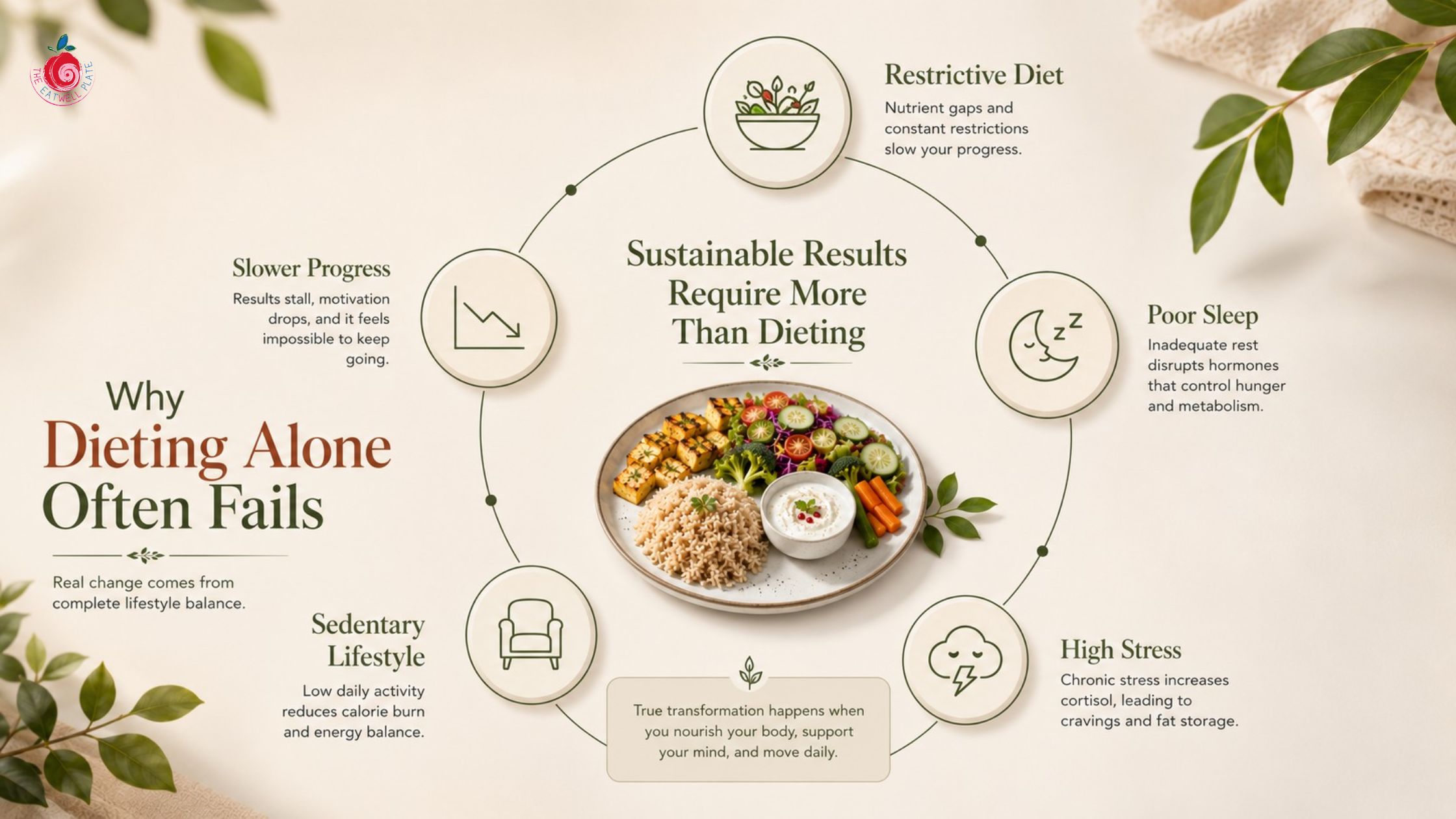
Unrealistic expectations lead people to abandon sustainable approaches in favor of quick fixes. The desire for rapid results is understandable, but it often leads to cycles of restriction and overeating.
Random internet diets lack the personalisation needed for safe, effective results. Following a trending weight loss diet without professional input can do more harm than good.
Key Factors That Support Healthy Weight Loss
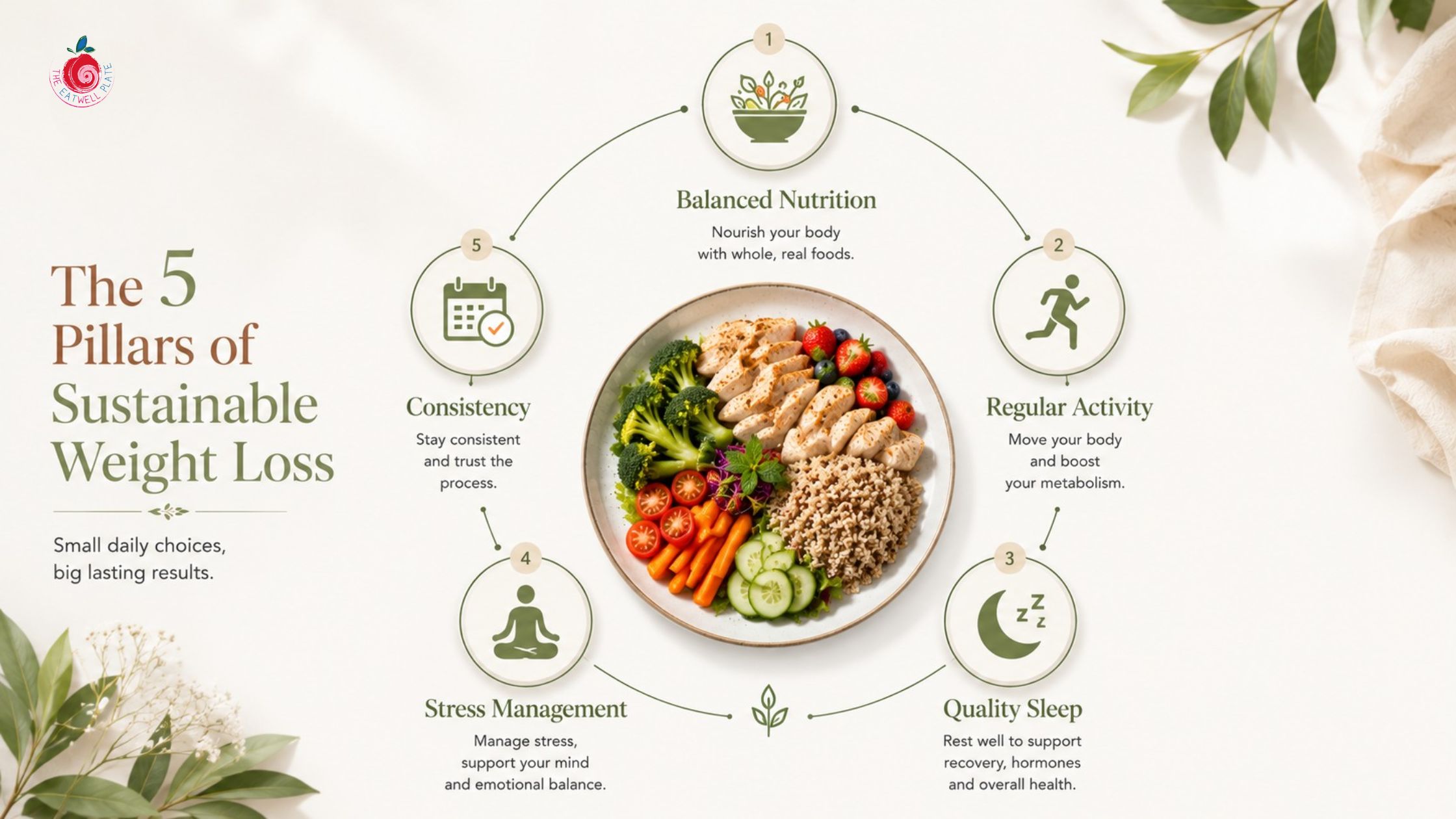
Sustainable weight loss is built on several interconnected pillars. Each one matters.
How Does Balanced Nutrition Support Sustainable Fat Loss?
Balanced nutrition means giving the body what it needs—not just less of everything. Adequate protein supports muscle retention during fat loss. Healthy fats support hormonal health. Complex carbohydrates provide sustained energy and reduce cravings.
A weight loss nutritionist does not simply reduce portion sizes. They ensure the body remains nourished throughout the journey, making the process both safer and more sustainable.
What Role Does Physical Activity Play in Weight Management?
Movement amplifies the results of a healthy weight loss diet. Exercise supports calorie expenditure, preserves lean muscle mass, improves insulin sensitivity, and boosts mood—all of which contribute to better long-term weight management.
Physical activity does not need to be intense to be effective. Consistent, enjoyable movement is far more valuable than occasional bursts of extreme exercise.
How Do Sleep and Stress Affect Weight Loss Progress?
This connection is often overlooked, but the evidence is clear. Poor sleep disrupts hunger hormones—specifically ghrelin and leptin—increasing appetite and cravings for high-calorie foods. Chronic stress elevates cortisol, a hormone associated with fat storage, particularly around the abdomen.
No diet plan for weight loss can fully compensate for chronic sleep deprivation or unmanaged stress. These lifestyle factors must be addressed alongside nutrition.
Why Is Consistency More Important Than Perfection in a Fat Loss Journey?
Sustainable weight loss is not about eating perfectly every day. It is about making better choices most of the time, over a long period. Behavior change—building habits that become automatic—is what separates people who maintain their results from those who regain lost weight.
This is why long-term weight management requires mindset and habit work, not just a meal-by-meal guide.
| Approach | Impact on Weight Loss |
| Random Dieting | May provide temporary results |
| Balanced Nutrition | Supports sustainable progress |
| Lifestyle Changes | Improves long-term consistency |
| Professional Guidance | Provides personalised support |
Why Personalized Diet Guidance Matters More Than Generic Plans
A personalised diet plan accounts for the full picture of a person’s health. Two individuals with the same weight loss goal may need entirely different nutrition strategies based on their health conditions, hormonal profile, food preferences, cultural eating habits, and daily schedule.
For women, factors like PCOS, thyroid conditions, or post-pregnancy hormonal changes significantly affect how the body responds to dietary changes. For working professionals with demanding schedules, the practicality of a plan matters as much as its nutritional quality.
Personalised nutrition guidance also adapts over time. As the body changes and progresses, the nutrition strategy should evolve too. This dynamic, responsive approach is simply not possible with a static internet diet.
| Weight Loss Factor | Why It Matters |
| Nutrition | Supports healthy body functions |
| Activity | Helps maintain an active lifestyle |
| Sleep | Supports overall wellness |
| Consistency | Helps achieve sustainable results |
Common Mistakes People Make During Their Weight Loss Journey
Understanding what to avoid is just as important as knowing what to do.
- Following trending internet diets without understanding how they apply to individual health needs
- Skipping essential nutrients in the pursuit of rapid results, leading to fatigue, muscle loss, and nutrient deficiencies
- Expecting quick fixes rather than committing to gradual, sustainable progress
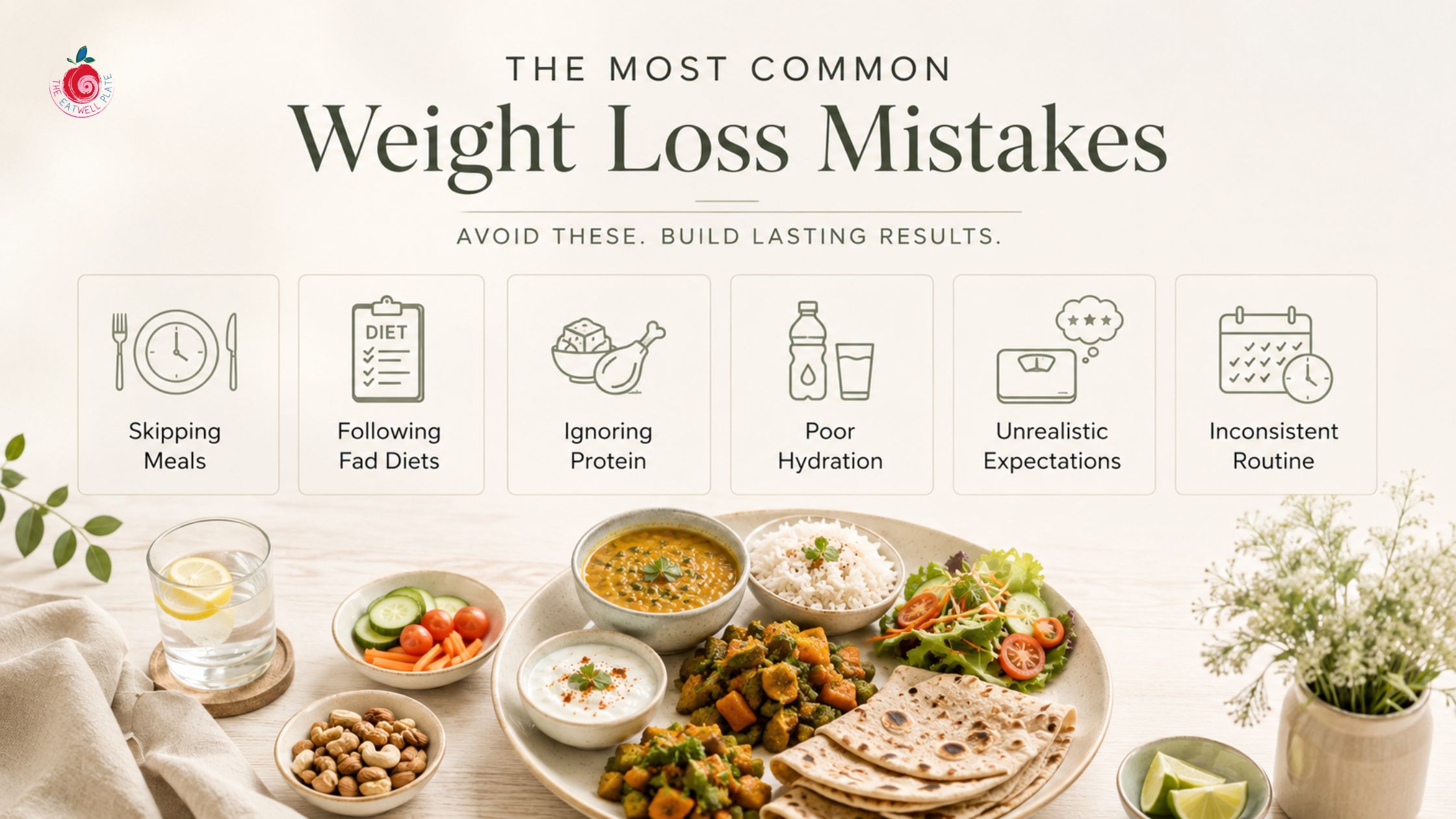
- Ignoring professional advice and relying solely on online content, which often lacks the personalisation needed for safe results
- Comparing progress to others, without accounting for individual differences in body composition, metabolism, and health history
These mistakes are extremely common—and entirely understandable. Without proper nutrition guidance, most people are simply working with incomplete information.
How a Dietitian Helps Create a Sustainable Weight Loss Approach
A qualified weight loss nutritionist does far more than hand over a diet chart. The process involves understanding an individual’s full health picture, setting realistic and meaningful goals, and designing a strategy that fits real life—not an idealised version of it.
A professional dietitian monitors progress over time, identifies what is working and what needs adjustment, and provides the accountability and motivation that makes long-term change possible. They also help clients understand why certain food choices support their goals, building nutrition literacy that extends well beyond any single consultation.
Importantly, professional nutrition guidance addresses the emotional and psychological dimensions of eating—something a chart alone cannot do.
Why Choose The EatWell Plate for Weight Management Guidance?
The EatWell Plate, led by Dietitian Sangeeta, is a trusted destination for personalised nutrition and weight management support. With over 12 years of experience and more than 10,000 clients served, The EatWell Plate has built a reputation for science-backed, sustainable, and practical weight loss guidance.
The approach at The EatWell Plate is rooted in personalisation. Rather than prescribing generic plans, Dietitian Sangeeta works closely with each client to understand their unique health profile, lifestyle, and goals—then creates a strategy that fits.
For those looking for the best dietitian in Chandigarh, The EatWell Plate’s Google Business Profile reflects years of consistent results and client satisfaction, with a 4.9-star rating from hundreds of clients across India. Online consultations are also available, making expert nutrition guidance accessible regardless of location.
The focus is always on long-term weight management—not quick fixes, not crash diets, and not one-size-fits-all advice. For more information on the approach to healthy weight loss guidance, visit The EatWell Plate’s website.
Building a Smarter Path to Healthy Weight Loss
Dieting alone can initiate change, but it rarely sustains it. Healthy weight loss is the result of multiple factors working together—a structured diet chart for weight loss, consistent physical activity, quality sleep, managed stress, and above all, a personalised approach guided by qualified expertise.
The goal is not to eat as little as possible. The goal is to nourish the body intelligently, build habits that last, and create a relationship with food that supports long-term health and well-being.
If you have tried multiple diets without lasting results, the missing element is likely not more restriction—it is the right guidance, tailored specifically to you. A weight loss consultation with a qualified dietitian can provide the clarity, structure, and support that make sustainable results possible.
Frequently Asked Questions (FAQs)
Q1. Is a diet chart for weight loss enough to achieve sustainable results?
A diet chart for weight loss is an important starting point, but sustainable results also require consistent physical activity, quality sleep, stress management, and long-term lifestyle changes. Professional nutrition guidance helps ensure the approach is safe, personalised, and effective over time.
Q2. Why is a personalized diet plan better than following a popular internet diet?
Every person has different nutritional needs based on age, health conditions, hormones, and lifestyle. A personalised diet plan accounts for these individual factors, making it safer and more effective than generic plans that are not designed with your specific body and goals in mind.
Q3. How does stress affect weight management?
Chronic stress raises cortisol levels, a hormone linked to increased appetite and fat storage, especially around the abdomen. Managing stress is an important part of any healthy weight loss strategy, alongside proper nutrition and physical activity.
Q4. When should I consult a weight loss nutritionist?
Consider consulting a weight loss nutritionist if you have tried dieting without lasting results, have an existing health condition, or want a structured, personalised approach to fat loss. A qualified dietitian provides expert support and accountability throughout the entire journey.
Want to understand the right approach for your weight loss journey? Contact The EatWell Plate – Best Dietician in Chandigarh for personalised nutrition guidance and expert support to achieve healthy and sustainable weight management goals.