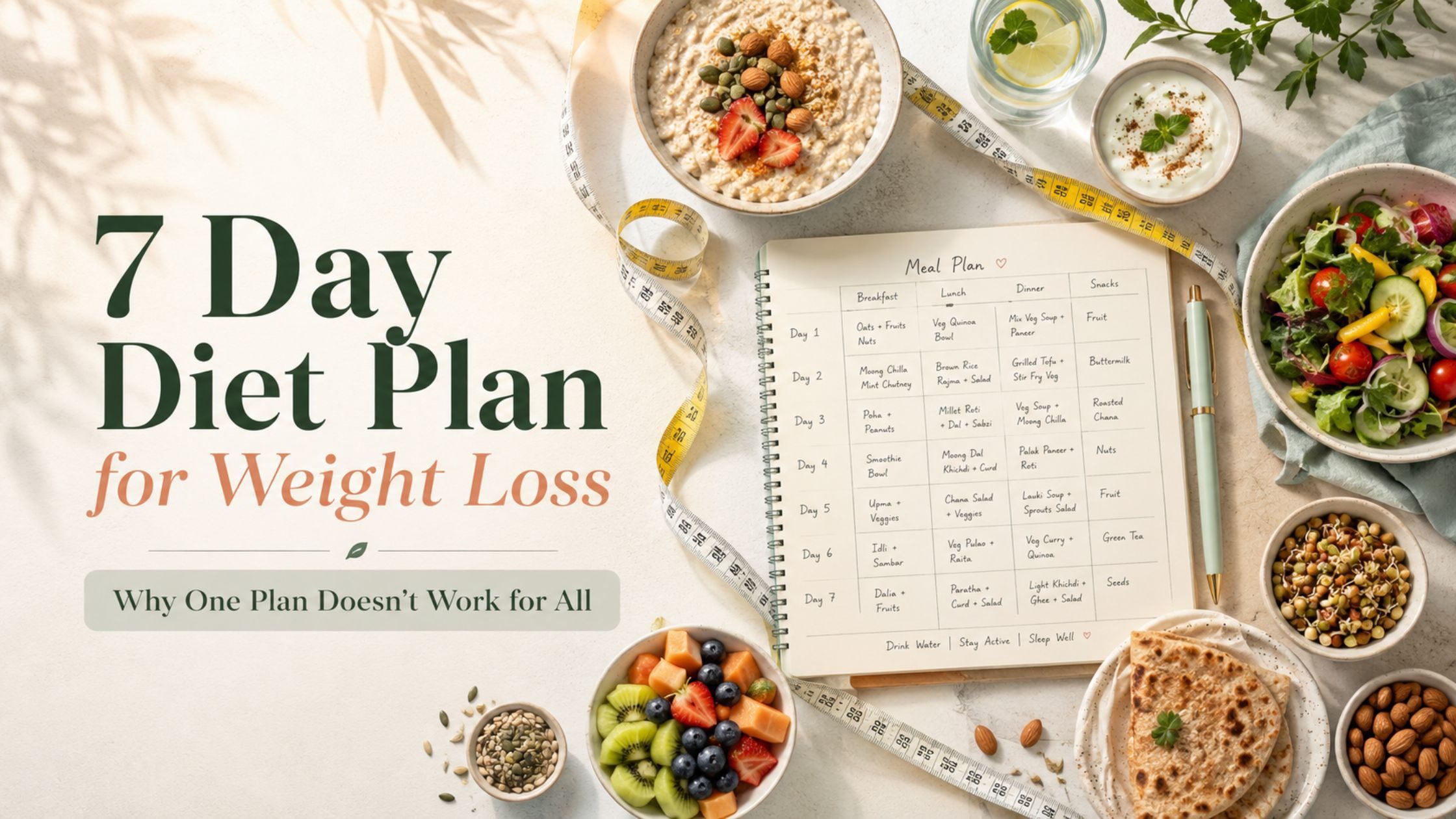
Many people search for a 7 Day Diet Plan For Weight Loss hoping for quick and lasting results. However, what works for one person may not work for another. Factors such as metabolism, age, activity level, medical conditions, and dietary habits all influence how the body responds to a weight loss plan.
So why do so many people follow the same 7 Day Diet Plan For Weight Loss and get completely different outcomes? The answer lies in your body. Two people can eat the exact same meals and see two very different results.
In this guide, you’ll learn why generic diet plans often fail, which factors truly affect fat loss, and why personalized nutrition delivers better long-term results. By the end, you’ll know how to choose a plan that actually fits your life.
Quick Answer: Why Doesn’t One 7 Day Diet Plan For Weight Loss Work for Everyone?
Quick answer: A single 7 Day Diet Plan For Weight Loss cannot work for everyone because each body is unique. Your metabolism, age, gender, activity level, medical conditions, and food habits all shape your results. A plan that helps one person lose weight may stall another. Personalized nutrition matches your calorie needs and lifestyle, making weight loss healthier and more sustainable.
Does One Diet Plan Work for Everyone?
No. One diet plan does not work for everyone. Your body has its own calorie needs, hormones, and habits. A 25-year-old gym-goer and a 50-year-old office worker burn energy very differently.
Generic plans ignore these differences. That’s why a friend may lose 4 kg on a plan while you lose nothing. The plan didn’t fail—it simply wasn’t built for you.
Understanding How Weight Loss Works
Weight loss happens when you eat fewer calories than your body burns. This is called a calorie deficit. Over time, your body uses stored fat for energy.
But a calorie deficit looks different for each person. Your daily calorie needs depend on your weight, muscle mass, activity, and metabolism.
Healthy weight loss is slow and steady. Most experts suggest losing around 2–4 kg per month. Rapid weight loss often leads to muscle loss and quick regain.
A good weight loss diet plan focuses on three things:
- A safe calorie deficit
- Balanced nutrition
- Habits you can maintain
Why Generic Diet Plans Often Fail
Generic diet plans treat everyone the same. They assume all bodies need the same calories and foods. In reality, they rarely match your needs.
Here’s why most generic plans fail:
- One calorie level for all: A 90 kg man and a 55 kg woman get the same plan.
- No food preferences: Plans ignore what you enjoy or can cook.
- No medical support: They overlook diabetes, thyroid, or PCOS.
- Short-term focus: A 7-day plan ends, and old habits return.
A meal plan for weight loss must fit your real life. Otherwise, you stop following it within days.
The Biggest Mistake People Make with a 7 Day Diet Plan
The biggest mistake is copying someone else’s plan. You see results online and try the same meals. But your body, schedule, and goals are different.
Another common mistake is starving yourself. Extreme low-calorie plans slow your metabolism. Your body holds onto fat to protect itself. This leads to fatigue, cravings, and rebound weight gain.
What Factors Influence Weight Loss Results?
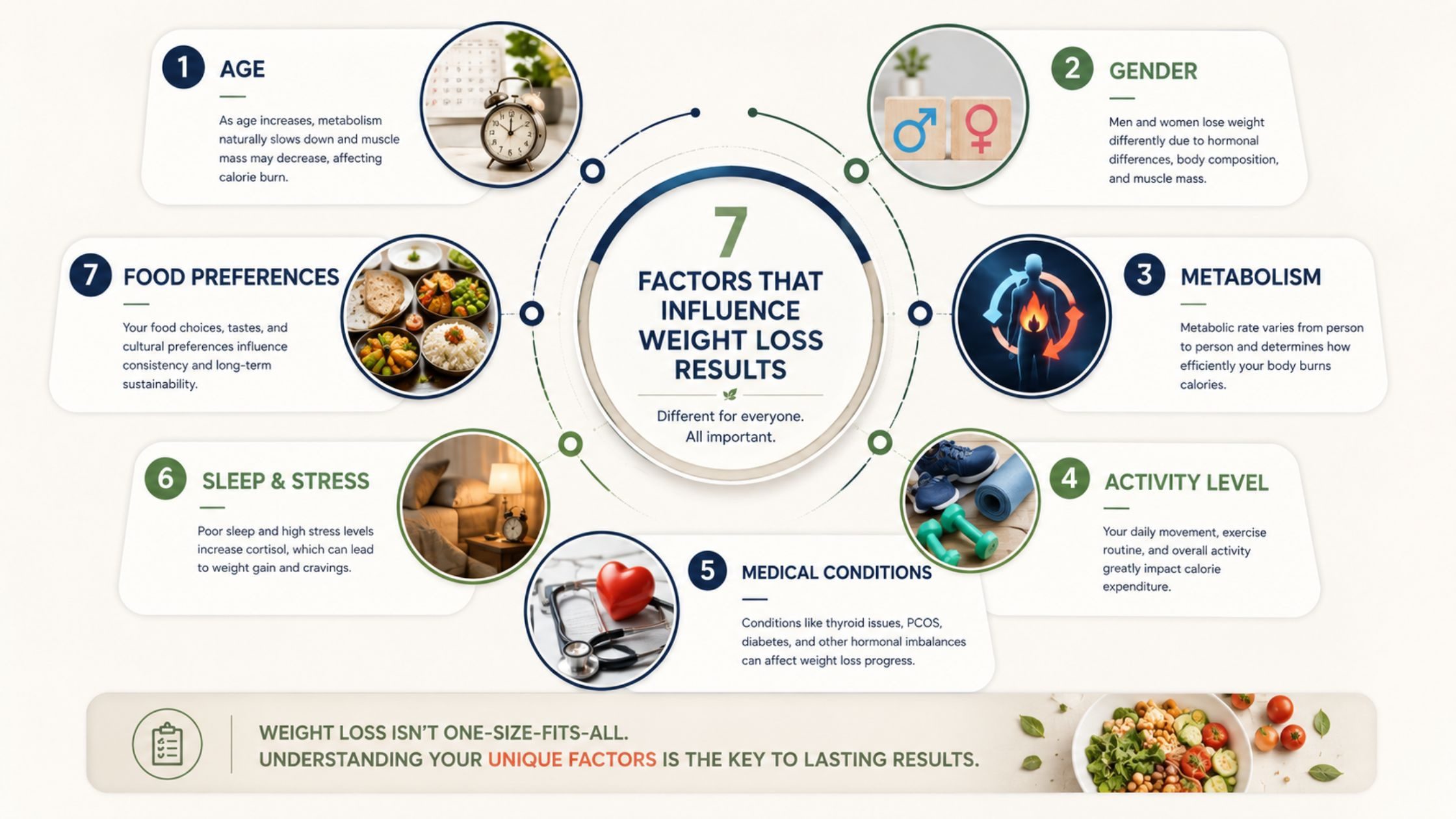
Many factors affect how your body responds to a diet plan for fat loss. Understanding them helps you see why personalized nutrition matters.
Age
Your metabolism slows as you age. A plan that worked at 25 may not work at 45. Older adults often need more protein and fewer empty calories.
Gender
Men and women have different muscle and hormone levels. Men usually burn more calories at rest. Women may face challenges like PCOS or hormonal shifts.
Metabolism
Metabolism controls how fast you burn energy. Some people have a fast metabolism; others burn slower. This directly affects your calorie needs.
Activity Level
A desk worker and an athlete need very different plans. Active people burn more and can eat more. Sedentary people need tighter portion control.
Medical Conditions
Diabetes, thyroid issues, and PCOS change how your body stores fat. These conditions need careful, customized meal plans.
Sleep and Stress
Poor sleep and high stress raise cortisol levels. This increases cravings and fat storage. Even a perfect diet struggles against constant stress.
Food Preferences
You won’t follow a plan you dislike. A vegetarian, a non-vegetarian, and a person who eats out often all need different menus.
Why Personalized Nutrition Matters
Personalized nutrition matches your diet to your body and lifestyle. It accounts for your calorie needs, health, and food choices. As a result, you lose weight in a way that feels natural.
A personalized diet plan adapts as you progress. When your weight changes, your plan changes too. This keeps results steady and prevents plateaus.
At The EatWell Plate, every plan starts with a body assessment and a one-on-one consultation. The focus stays on balanced nutrition, portion control, and locally available Indian foods. This makes healthy weight loss easier to sustain.
Generic Diet Plan vs Personalized Plan Comparison
While generic diet plans follow the same approach for everyone, personalized plans are designed according to your body, lifestyle, and health needs. Here’s how they differ:
Calorie Requirements: Generic diet plans provide the same calorie targets for everyone, whereas personalized plans are based on your body’s unique requirements.
Food Preferences: Generic plans usually follow a fixed menu, while personalized plans are built around your tastes and eating habits.
Medical Conditions: Most generic diets ignore health concerns, whereas personalized plans fully consider conditions such as PCOS, thyroid disorders, or diabetes.
Sustainability: Generic diets can be difficult to maintain for the long term. Personalized plans are easier to follow because they fit naturally into your lifestyle.
Weight Loss Success: Results from generic diets are often unpredictable, while personalized plans tend to deliver more consistent outcomes.
Nutritional Balance: Generic meal plans may lack essential nutrients, whereas personalized plans are carefully balanced to meet your nutritional needs.
Lifestyle Compatibility: Generic diets are usually rigid, but personalized plans offer the flexibility needed to suit your daily routine.
Long-Term Results: Generic diets rarely provide lasting success, while personalized plans are designed to support sustainable, long-term results.
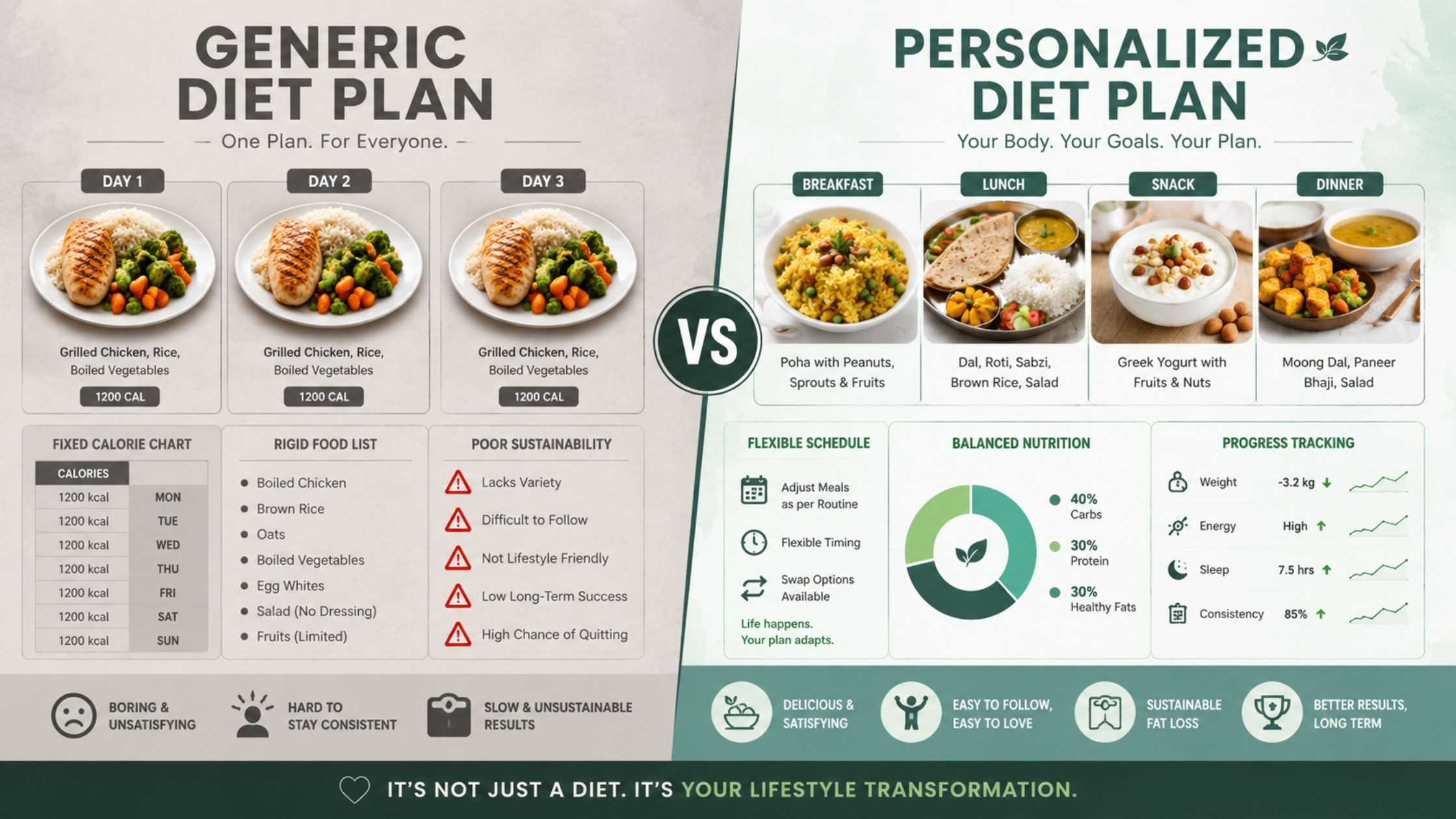
The difference is clear. A balanced diet plan made for you beats a one-size-fits-all chart every time. If you’ve been struggling to see results despite your best efforts, it may not be a lack of discipline—it could simply mean that your body needs a different approach. A personalized diet plan helps you work with your body instead of against it, making your journey toward healthy and lasting weight loss much more achievable.
Why Your Friend’s Weight Loss Diet May Not Work for You
Your friend’s success doesn’t guarantee yours. Two people rarely share the same metabolism, schedule, and health. Here’s how diet needs differ across common profiles:
Working Professional: Needs quick meals and easy office-friendly options that fit a busy schedule.
Homemaker: Benefits from simple, home-cooked meals that the whole family can enjoy.
Senior Adult: Requires higher protein intake and nutrients that support joint and bone health.
Fitness Enthusiast: Needs additional protein and balanced nutrition for muscle recovery and performance.
Person with Diabetes: Requires controlled carbohydrate intake to maintain stable blood sugar levels.
Person with PCOS/PCOD: Benefits from hormone-friendly, balanced meals that support metabolic health.
Each profile shows why nutrition for weight loss must be personal. The same diet cannot work for everyone because lifestyle, health conditions, and nutritional requirements vary from person to person.
Common Weight Loss Mistakes to Avoid
Many people repeat the same errors. Avoid these to protect your progress:
- Skipping meals to cut calories fast
- Following crash diets with no balance
- Cutting out entire food groups
- Relying only on exercise, not diet
- Ignoring protein and fiber
- Expecting rapid results in a few days
Sustainable weight loss comes from steady habits, not shortcuts.
Signs You Need a Personalized Weight Loss Plan
Not sure if you need a custom plan? Use this quick checklist. If you tick several boxes, it’s time for expert help.
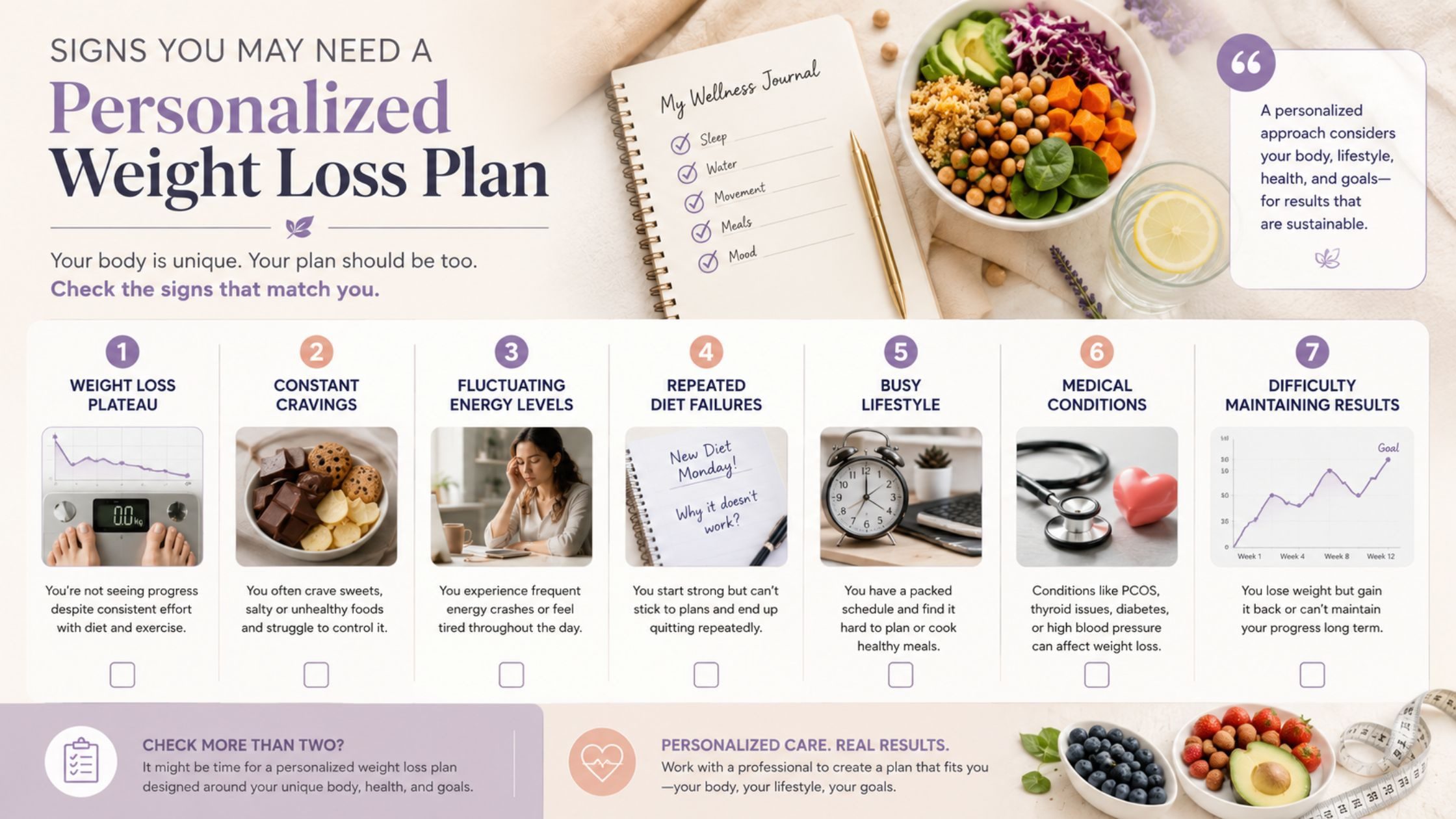
- Your weight loss has hit a plateau
- You face frequent cravings
- Your energy levels keep fluctuating
- You have existing medical conditions
- You’ve faced repeated diet failures
- You have a busy, unpredictable lifestyle
- You struggle to maintain results
These signs point to one solution: personalized nutrition.
Benefits of Working with a Professional Dietitian
A dietitian consultation removes the guesswork. Instead of trying random plans, you get expert guidance built around your body.
Here’s what a professional dietitian offers:
- A diet based on your body composition
- Support for medical conditions like diabetes or PCOS
- Regular monitoring and plan adjustments
- Habit and lifestyle coaching
The EatWell Plate – Best Dietician in Chandigarh brings over 12 years of experience in weight management. Their team designs personalized weight loss plans that fit Indian lifestyles and real routines.
How to Build Sustainable Weight Loss Habits
Long-term success comes from daily habits, not quick fixes. Build these into your routine for lasting results:
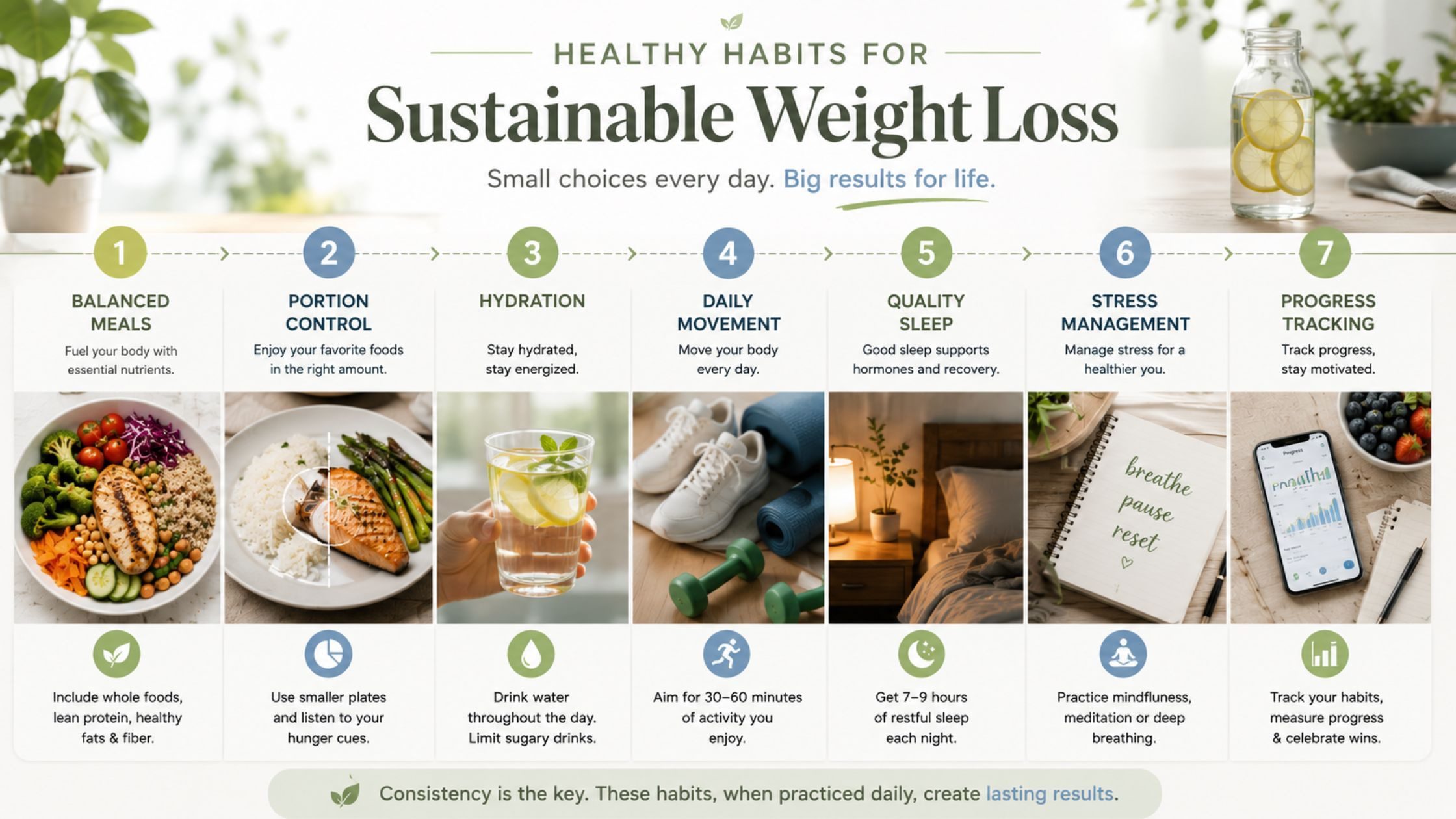
- Eat balanced meals: Include protein, fiber, and healthy fats.
- Practice portion control: Use smaller plates and mindful eating.
- Stay active: Add simple movement to your day.
- Sleep well: Aim for 7–8 hours nightly.
- Manage stress: Try walking, breathing, or short breaks.
- Track progress: Adjust your plan as your body changes.
These healthy eating habits support sustainable weight loss for life.
How to Choose the Right Weight Loss Plan
Choose a plan that fits you, not a trend. Ask these questions before you start:
- Does it match my calorie needs?
- Does it include foods I enjoy?
- Does it consider my health conditions?
- Can I follow it long term?
If you answer no to any of these, you need a custom diet plan. Explore expert-led personalized weight loss plans to get started safely.
Start Your Personalized Weight Loss Journey
A generic 7 Day Diet Plan For Weight Loss can spark motivation, but it rarely delivers lasting results. Your body deserves a plan built around your age, metabolism, lifestyle, and goals. Personalized nutrition is the key to healthy, sustainable weight loss.
Don’t waste another week on a plan that wasn’t made for you. Get expert nutrition guidance and achieve sustainable weight loss results with a plan designed just for you.
Ready to start? Contact The EatWell Plate today for a customized diet consultation and explore their weight management programs for long-term success.
Frequently Asked Questions (FAQs)
Q1. Does a 7 Day Diet Plan For Weight Loss really work?
A 7 Day Diet Plan For Weight Loss can kickstart your journey, but results vary by person. Short-term plans rarely create lasting change. For healthy, sustainable weight loss, you need a personalized plan based on your metabolism, lifestyle, and health goals.
Q2. How much weight can I safely lose in a week?
Safe weight loss is around 0.5–1 kg per week, or about 2–4 kg per month. Rapid loss often means water or muscle, not fat. Steady progress through a balanced diet plan protects your health and keeps the weight off long term.
Q3. Why am I not losing weight on a popular diet plan?
You may not lose weight because the plan doesn’t match your body. Your metabolism, calorie needs, medical conditions, or stress levels could be working against it. A personalized diet plan fixes these gaps and aligns nutrition with your unique needs.
Q4. Should I consult a dietitian for weight loss?
Yes. A dietitian consultation gives you a custom diet plan built around your body composition, health, and food preferences. Experts like The EatWell Plate also provide ongoing support, helping you avoid plateaus and achieve sustainable weight loss results.