Quick answer: A balanced, personalized nutrition approach can support women with PCOD by helping manage blood sugar, weight, energy levels, and digestive health. Rather than searching for a generic PCOD Diet Chart, women benefit most from individualized guidance that considers their lifestyle, preferences, and medical history, ideally alongside professional support.
Living with PCOD (Polycystic Ovarian Disease) often means navigating a lot of conflicting advice. One day you read that cutting carbs entirely is the answer. The next, someone recommends a specific superfood that promises to fix everything. It’s confusing, and frankly, exhausting.
PCOD affects women differently. Some experience irregular periods, others struggle with weight management, and many deal with a combination of symptoms that make daily life feel unpredictable. Because of this variation, nutrition plays an important role in an overall PCOD management approach, but it isn’t a one-size-fits-all solution.
Many women search online for a “PCOD Diet Chart,” hoping for a simple, ready-made plan. However, individual needs, lifestyle, and health history all affect what works. This blog won’t give you a diet chart. Instead, it will help you understand why nutrition matters for PCOD, what factors shape dietary needs, and how to build sustainable eating habits that actually fit your life.
If you’re based in Chandigarh or the Tricity area and looking for personalized guidance, this article will also point you toward where you can find qualified support.
What Is the Connection Between PCOD and Nutrition?
Nutrition doesn’t exist in isolation when it comes to PCOD. What you eat, how often you eat, and the balance of nutrients in your meals can influence your overall health and how your body responds to daily demands.
Many women with PCOD also experience some degree of insulin resistance. This means the body doesn’t use insulin as efficiently as it should, which can affect blood sugar regulation. Balanced meals that include fibre, protein, and healthy fats can help support steadier blood sugar levels throughout the day.
Fibre-rich foods slow down digestion and help you feel fuller for longer. Protein supports muscle maintenance and satiety. Healthy fats play a role in hormone production and help your body absorb certain vitamins. Vitamins and minerals, meanwhile, support everything from energy metabolism to immune function.
It’s important to be clear here: no single food or diet cures PCOD. Nutrition works best as one part of a broader management approach that includes medical care, physical activity, and lifestyle adjustments. Think of balanced eating as a tool that complements medical guidance, not a replacement for it.
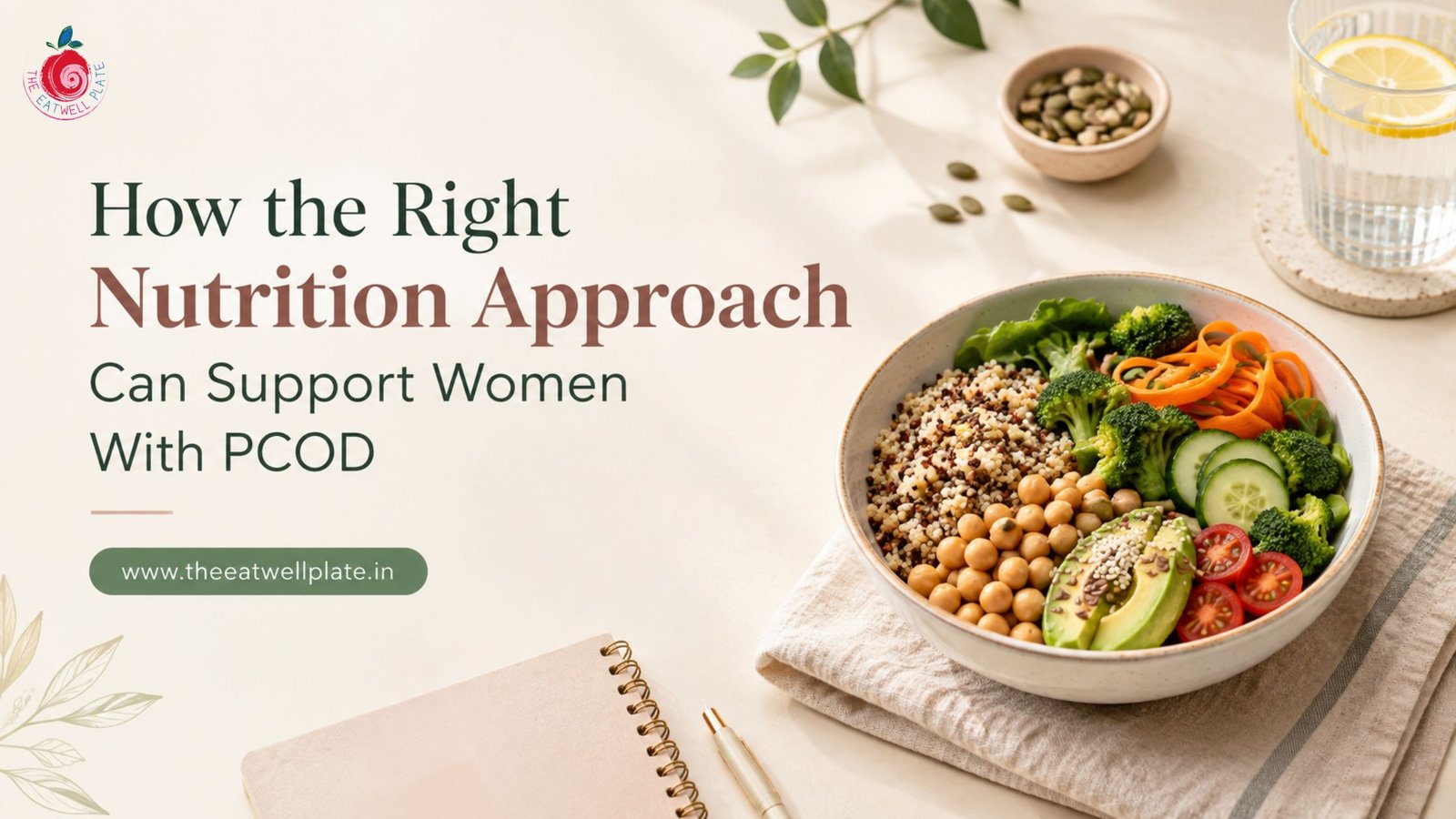
How the Right Nutrition Approach Can Support Women With PCOD
When nutrition is approached thoughtfully, it can make a genuine difference in daily life for women managing PCOD. Here’s what a balanced approach can realistically offer.
Supporting healthy weight management. For women whose healthcare provider has recommended weight management, balanced nutrition can make this process more sustainable and less stressful.
Helping maintain steadier energy levels. Balanced meals with protein, fibre, and healthy fats can help prevent the energy crashes that come from skipping meals or relying on high-sugar snacks.
Supporting blood sugar management. As mentioned earlier, consistent, balanced eating patterns may help support more stable blood sugar levels over time.
Encouraging adequate nutrient intake. A varied diet helps ensure your body gets the vitamins and minerals it needs to function well.
Supporting digestive health. Fibre-rich foods and adequate hydration support regular digestion, which many women find improves overall comfort.
Helping build sustainable habits. Rather than short-term fixes, a thoughtful nutrition approach focuses on habits you can maintain long-term.
Making food choices less stressful. Understanding the “why” behind food choices, rather than following rigid rules, often reduces anxiety around eating.
It’s worth repeating: results vary from woman to woman. Nutrition alone cannot promise regular periods, improved fertility, or complete symptom elimination. What it can do is support your overall wellbeing as part of a comprehensive approach.
Which Foods Can Be Part of a Balanced PCOD-Friendly Eating Pattern?
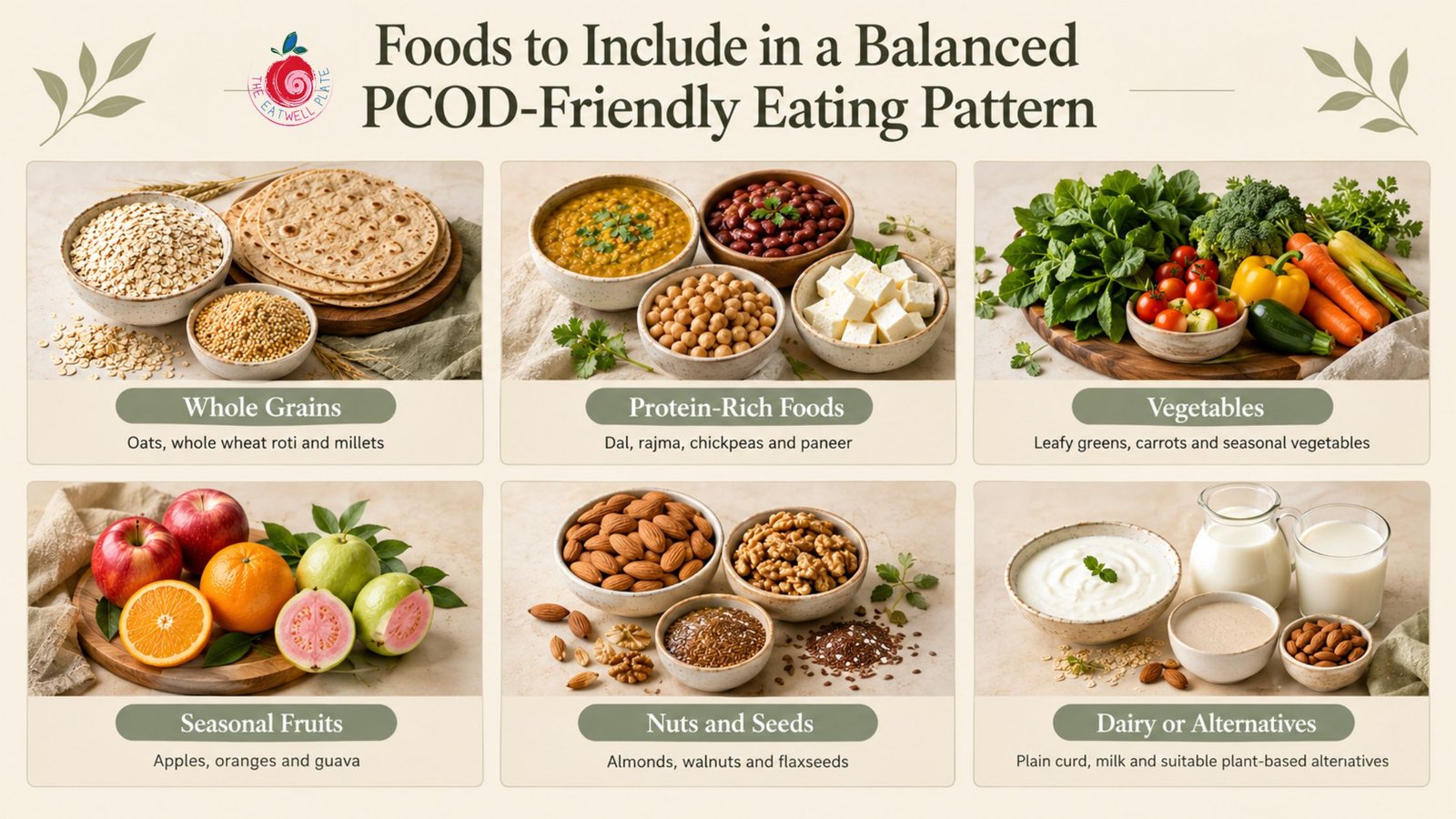
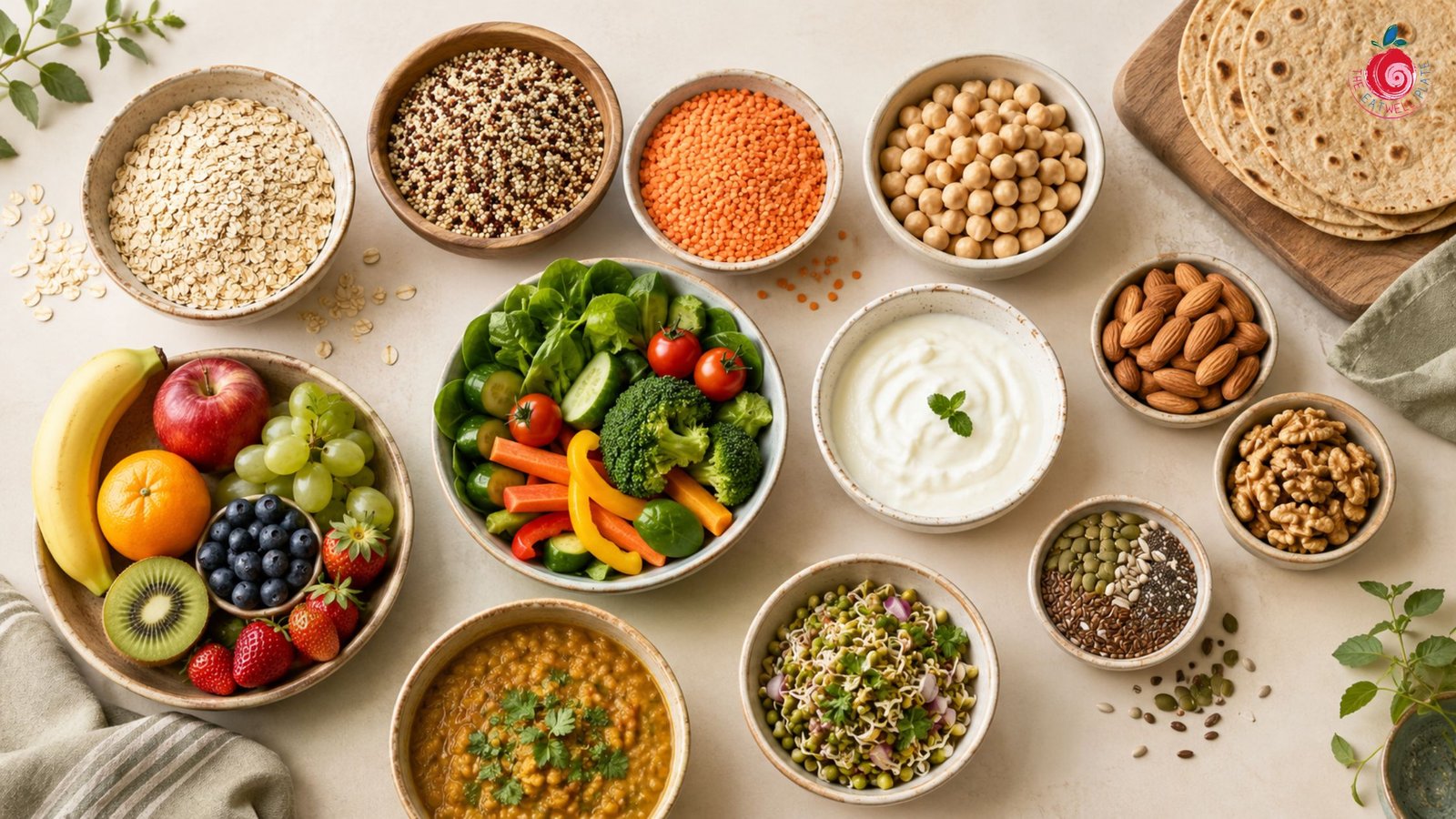
Rather than following a rigid PCOD Diet Chart, it helps to understand broad food categories that can support balanced eating. Indian cuisine already offers plenty of options that fit naturally into this approach.
Whole grains and fibre-rich foods. Options like brown rice, whole wheat roti, millets such as bajra and jowar, and oats provide fibre and sustained energy.
Pulses, lentils, and vegetarian protein sources. Dal, rajma, chana, and soy-based foods are staples in Indian households and offer excellent plant-based protein.
Vegetables and seasonal fruits. A colorful mix of vegetables and seasonal fruits provides fibre, antioxidants, and essential vitamins.
Nuts, seeds, and healthy fats. Almonds, walnuts, flaxseeds, and cooking oils like mustard or olive oil can offer beneficial fats in appropriate portions.
Dairy or suitable alternatives. Depending on individual tolerance, dairy products like curd and paneer, or plant-based alternatives, can be part of a balanced diet.
Balancing carbohydrates with protein, fibre, and fats. Pairing carbohydrate-rich foods like rice or roti with dal, vegetables, and a source of fat helps slow digestion and supports steadier energy.
No single food on this list is essential for everyone. What matters is finding a combination that suits your preferences, budget, and how your body responds, which is exactly why a generic PCOD Diet Chart often falls short of addressing individual needs.
Foods and Eating Habits Women With PCOD Should Review
Rather than labeling foods as strictly forbidden, it’s more useful to look at eating patterns that might benefit from some attention.
- Frequent consumption of highly refined, low-fibre foods like white bread or refined flour products
- Regularly drinking sugary beverages or consuming large amounts of added sugar
- Depending heavily on highly processed, packaged snacks
- Skipping meals in a way that leads to excessive hunger later
- Following extreme restriction diets or crash diets for quick results
- Copying another person’s diet plan without considering your own needs
None of this means you need to eliminate these foods completely or feel guilty if you enjoy them occasionally. The goal is balance and consistency, not perfection. Strict, fear-based approaches to food often backfire and are harder to sustain than gradual, mindful changes.
Why a Personalized Nutrition Approach Matters for PCOD
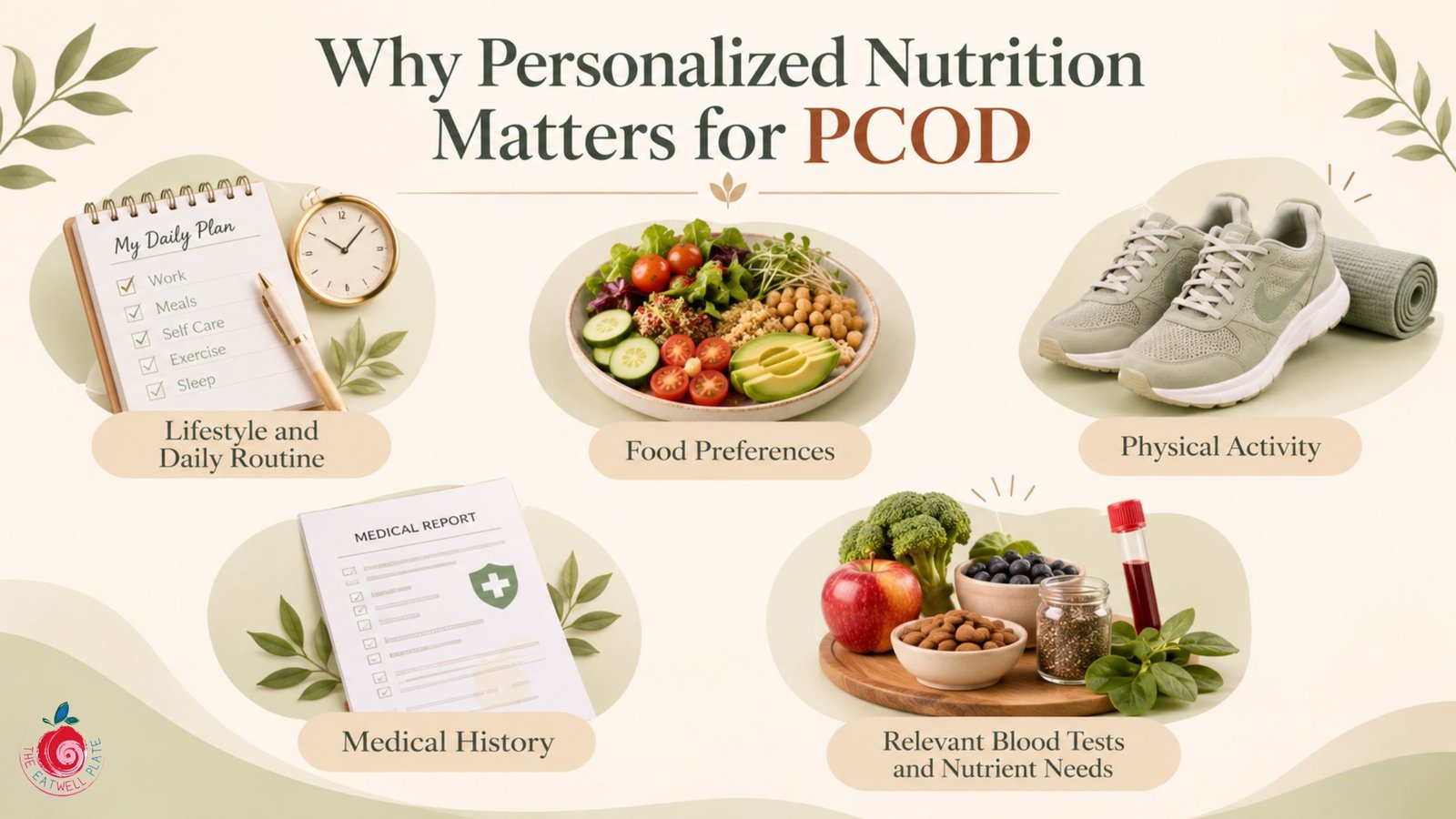
Here’s something worth understanding clearly: the same nutrition plan won’t work identically for every woman with PCOD. Several factors shape what an individual actually needs.
- Age and daily lifestyle demands
- Weight-management goals, where relevant to the individual
- Activity levels and how physically demanding your routine is
- Food preferences, including vegetarian eating habits common across India
- Medical history and any existing health conditions
- Blood sugar concerns and relevant lab results
- Nutrient deficiencies identified through testing by a healthcare professional
- The specific menstrual symptoms you’re experiencing and your treatment plan
This is precisely why a generic PCOD Diet Chart found online often doesn’t reflect what your body actually needs. A chart designed for one woman’s lifestyle, activity level, and health profile may not suit another woman’s situation at all. Personalized guidance considers your specific circumstances rather than applying a blanket solution.
If you’re looking for nutrition support tailored to your needs, The EatWell Plate’s PCOD service page offers more information on how personalized guidance works.
Common PCOD Nutrition Mistakes to Avoid
Even well-intentioned efforts can go wrong without the right information. Here are some common missteps worth avoiding.
Expecting one food to solve everything. No single ingredient, however nutritious, can address every PCOD-related concern on its own.
Following extreme weight-loss diets. Very low-calorie or restrictive diets are difficult to maintain and can sometimes do more harm than good.
Removing entire food groups without good reason. Cutting out carbohydrates or fats entirely, without professional guidance, can lead to nutrient gaps.
Taking supplements without proper advice. Self-prescribing supplements based on online recommendations can be risky and isn’t a substitute for professional guidance.
Comparing your progress with others. Every woman’s body responds differently, so comparing your journey to someone else’s often leads to unnecessary frustration.
Expecting immediate results. Nutritional changes typically take time to show benefits. Patience matters here.
Treating online diet charts as personalized guidance. A downloaded PCOD Diet Chart cannot account for your unique health profile the way individualized advice can.
Instead of these approaches, consider gradual habit changes and, where needed, professional support to guide your journey sustainably.
How to Build Sustainable Eating Habits With PCOD
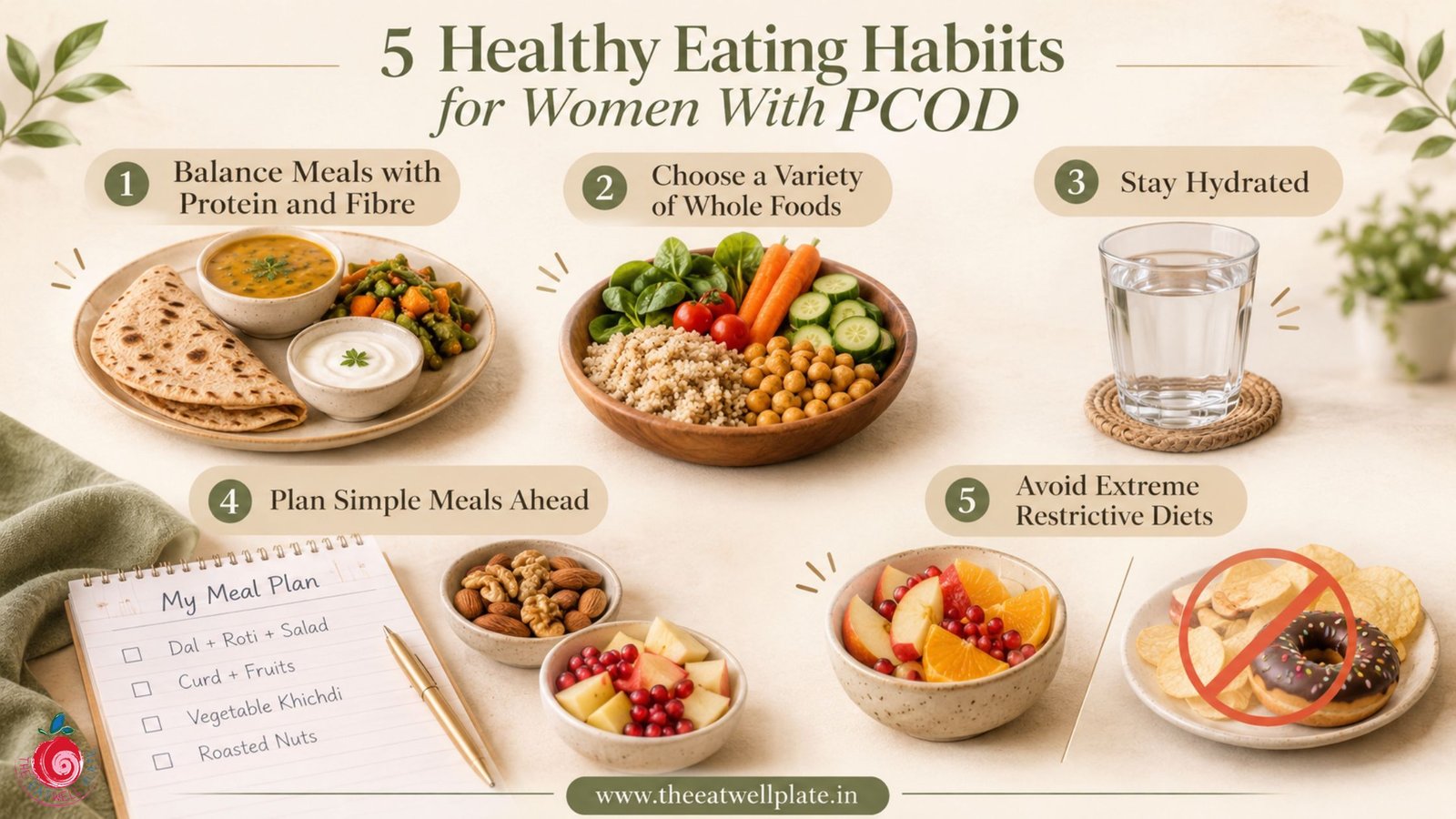
Building habits that last matters more than following a strict plan for a few weeks. Here’s practical guidance to consider.
Start by creating balanced meals using foods you already enjoy and have access to. This makes consistency easier. Include a suitable protein source, whether that’s dal, paneer, eggs, or legumes, in your main meals.
Increase fibre intake gradually rather than making drastic changes overnight, which can cause digestive discomfort. Staying well-hydrated throughout the day also supports digestion and overall energy.
Plan ahead for busy workdays. Having simple, balanced options ready reduces the temptation to reach for highly processed convenience foods. Aim for consistency, but allow flexibility, since rigid rules are harder to sustain long-term.
Finally, remember that nutrition works best alongside other lifestyle factors: suitable physical activity, adequate sleep, and appropriate medical care. These elements work together rather than in isolation.
PCOD Nutrition: Helpful Habits and Common Mistakes
| Nutrition Area | Helpful Approach | Common Mistake to Avoid |
| Carbohydrates | Choose fibre-rich sources and balance meals | Cutting out all carbohydrates without guidance |
| Protein | Include suitable protein sources regularly | Relying on a very limited range of foods |
| Fats | Include appropriate sources of unsaturated fats | Assuming all fats are unhealthy |
| Snacks | Consider balanced, satisfying options | Depending mainly on highly processed snacks |
| Weight management | Focus on gradual, sustainable habits | Following crash diets |
| Personalization | Consider individual needs and preferences | Copying someone else’s diet chart |
When Should Women With PCOD Seek Professional Nutrition Guidance?
Some situations call for more structured, personalized support rather than relying on general information alone. Consider seeking professional nutrition guidance if you:
- Feel overwhelmed by conflicting advice found online
- Struggle to maintain consistent, sustainable eating habits on your own
- Have PCOD alongside insulin resistance or other related health concerns
- Want structured support with weight management
- Have specific dietary preferences, restrictions, or nutritional requirements
- Need nutrition guidance that works alongside your existing medical treatment
A qualified professional can assess your individual situation and provide guidance tailored to your needs, something a generic online PCOD Diet Chart simply cannot do. Self-diagnosing or relying solely on internet searches often leads to confusion rather than clarity.
Women in Chandigarh and the Tricity area looking for individualized PCOD nutrition support can learn more through The Eat Well Plate’s PCOD page, which outlines how personalized guidance is approached.
For women specifically searching for nutrition support in the region, finding the Best Dietician in Chandigarh can make a meaningful difference in how effectively PCOD nutrition guidance is tailored to individual needs. The Eat Well Plate, led by Dietitian Sangeeta, is one option for women in Chandigarh exploring personalized nutrition support, subject to the specific services detailed on the clinic’s website. If you’re searching for local, professional guidance, it may be worth exploring The Eat Well Plate’s Google Business Profile or reaching out directly to learn more about how their approach to PCOD nutrition works for your individual situation.
Moving Forward With Confidence, Not Confusion
Managing PCOD through nutrition isn’t about finding the perfect chart or following someone else’s plan to the letter. It’s about understanding your body, building habits that fit realistically into your life, and seeking support when you need it.
Balanced eating, built around whole foods, adequate protein, fibre, and healthy fats, can genuinely support your overall wellbeing when combined with appropriate medical care and lifestyle habits. There’s no shortcut, but there is a sustainable path forward.
If you’re ready to move past generic advice and explore nutrition guidance tailored specifically to you, The Eat Well Plate’s PCOD services are worth exploring.
Frequently Asked Questions
Q1. How can nutrition support women with PCOD?
Balanced nutrition can help support blood sugar regulation, weight management, energy levels, and digestive health in women with PCOD. It works best as part of a broader approach that includes medical care and lifestyle adjustments, rather than as a standalone cure.
Q2. What should women consider when searching for a PCOD Diet Chart?
Instead of looking for a generic PCOD Diet Chart, women should consider factors like their activity level, food preferences, medical history, and any lab results. Since these factors vary widely, personalized guidance is more effective than a one-size-fits-all chart.
Q3. Can nutrition help with weight management in women with PCOD?
For some women, balanced nutrition can support healthy weight management when combined with suitable physical activity and medical guidance. However, outcomes vary between individuals, and nutrition should complement, not replace, professional care.
Q4. Why is personalized nutrition guidance important for PCOD?
Personalized guidance considers an individual’s lifestyle, preferences, medical history, and specific symptoms, which a generic diet plan cannot account for. This tailored approach makes sustainable, realistic changes more achievable.