

Quick answer: Yes, cherries can be included in a diabetes-friendly diet when consumed in appropriate portions. Cherries have a low glycemic index (around 20–22), are rich in antioxidants, and may help support blood sugar management. However, portion size matters, and individual responses to fruit can vary based on medication, overall diet, and health status.
Managing diabetes often means questioning every food choice—including fruits. Cherries, with their naturally sweet flavor, tend to raise a common concern: will they spike my blood sugar? The good news is that cherries are one of the lower-glycemic fruits available, and when eaten mindfully, they can fit comfortably into a balanced diabetic diet.
That said, not all fruit advice is one-size-fits-all. Your blood glucose response to cherries can vary depending on how much you eat, what else you eat with them, your medications, and your overall metabolic health. This is exactly why consulting a qualified Best Dietician in Chandigarh or a certified diabetes dietitian can make a meaningful difference in how you manage your diet.
This blog breaks down everything you need to know about cherries and diabetes—their nutritional profile, glycemic impact, benefits, precautions, and how to include them wisely in your daily routine.
What Is the Nutritional Profile of Cherries?
Cherries are more nutritionally dense than many people realize. A standard serving of about 100 grams (roughly 10–12 fresh cherries) contains approximately:
- Calories: 50–63 kcal
- Carbohydrates: 12–16 grams
- Dietary Fiber: 1.6–2 grams
- Natural Sugars: 8–12 grams
- Vitamin C: ~7 mg
- Potassium: ~173 mg
- Antioxidants: Rich in anthocyanins and polyphenols
Cherries also contain melatonin, quercetin, and other bioactive compounds that contribute to their anti-inflammatory properties. For someone managing diabetes, the fiber and antioxidant content are particularly noteworthy—fiber slows digestion and glucose absorption, while antioxidants help reduce oxidative stress, which is often elevated in people with diabetes.
What Is the Glycemic Index of Cherries, and Why Does It Matter?
The glycemic index (GI) measures how quickly a food raises blood sugar on a scale from 0 to 100. Foods with a lower GI cause a slower, more gradual rise in blood glucose—which is generally preferable for people managing diabetes or prediabetes.
Cherries have a GI of approximately 20–22, which places them among the lowest-GI fruits available. For context, watermelon has a GI of around 72, and ripe bananas range from 51–55. This makes cherries a significantly better choice for blood sugar management compared to many other commonly consumed fruits.
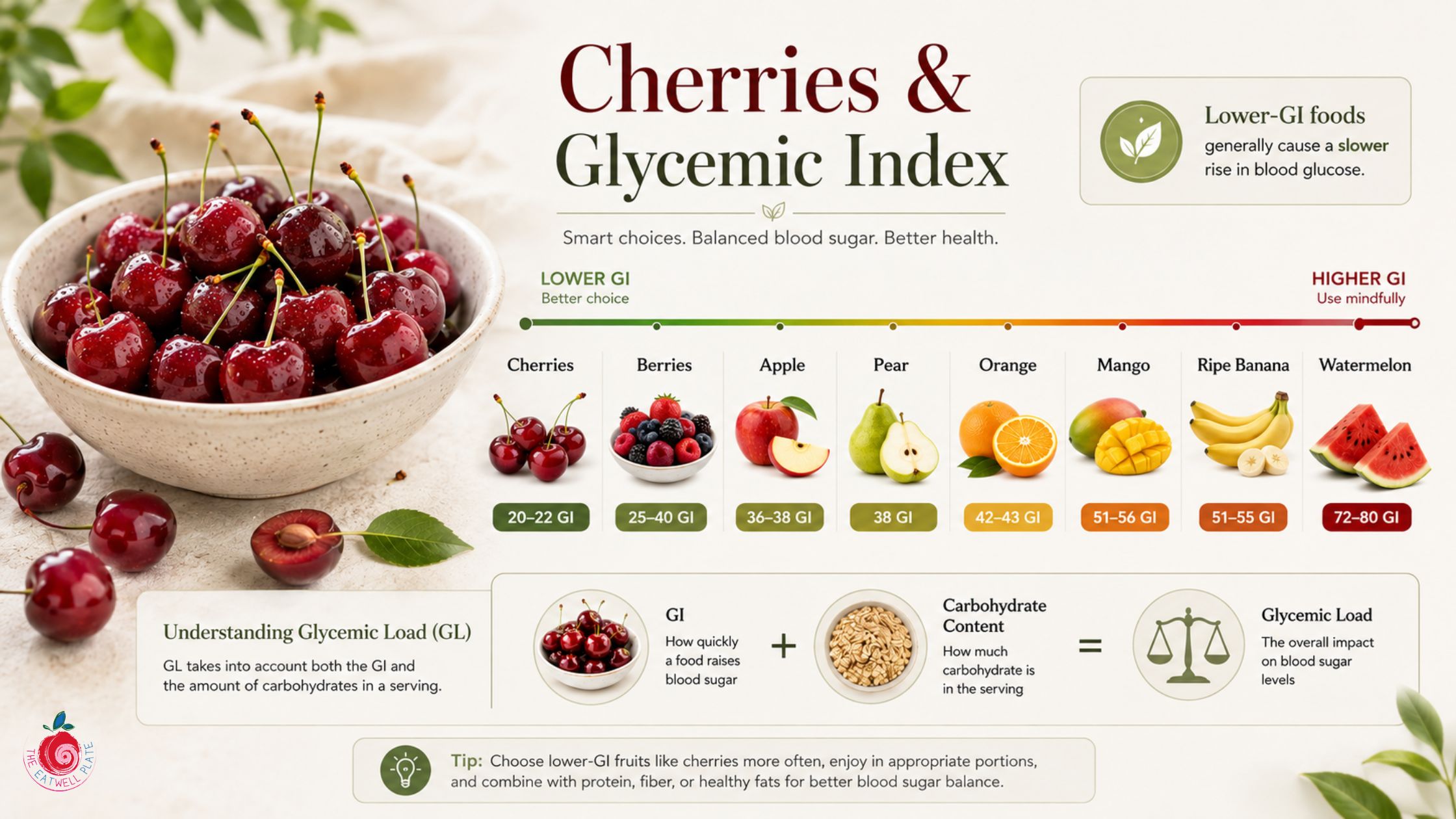
However, GI alone doesn’t tell the complete story. Glycemic load (GL), which accounts for both the GI and the actual carbohydrate content per serving, is equally important. The GL of a 100g serving of cherries is approximately 5–6, which is considered low. This means that when consumed in reasonable portions, cherries are unlikely to cause significant blood sugar spikes in most individuals.
Are Cherries Good for Diabetics? What the Evidence Suggests
Research suggests that cherries may offer several benefits relevant to people managing diabetes:
Blood sugar modulation: The anthocyanins in cherries have been studied for their potential to improve insulin sensitivity. According to research published in the Journal of Nutritional Biochemistry, anthocyanin-rich foods may help enhance glucose metabolism.
Anti-inflammatory effects: Chronic low-grade inflammation is closely associated with Type 2 diabetes. Cherries—particularly tart cherries—are well-documented for their anti-inflammatory properties, which may offer supportive benefits for people with diabetes.
Cardiovascular protection: People with diabetes are at a higher risk of cardiovascular complications. Cherries contain potassium and antioxidants that support heart health and may help manage blood pressure.
Weight management: At roughly 50–63 calories per 100g serving, cherries are relatively low in calories while being satisfying due to their fiber content. This makes them a smart snacking option when managing weight as part of a diabetic diet plan.
None of this means cherries can treat or cure diabetes on their own. These are supportive benefits when cherries are included as part of a well-balanced, individualized diet—not a standalone remedy.
How Many Cherries Can a Diabetic Person Eat?
Portion control is one of the most critical factors when including any fruit in a Sugar Patient Diet Chart. For most people with diabetes, a safe and reasonable serving is:
- 10–15 fresh cherries (approximately 100g) per day
- Consumed as part of a balanced meal or snack, ideally alongside a source of protein or healthy fat to further slow glucose absorption
- Preferably eaten whole and fresh rather than in juice, dried, or canned forms with added sugar
Dried cherries, maraschino cherries, and cherry juices should generally be avoided or consumed very sparingly, as these forms are significantly higher in sugar and have a much greater impact on blood glucose.

A qualified dietician in Chandigarh or a diabetic dietitian can help you determine the exact portion size that suits your specific blood glucose targets, medication plan, and meal timing.
How to Include Cherries in a Diet Chart for Diabetic Patients
Incorporating cherries into a Diet Chart For Diabetic Patient doesn’t require complicated adjustments. Here are a few practical, diabetes-friendly ways to enjoy them:
- As a mid-morning snack paired with a small handful of nuts (e.g., almonds or walnuts) to balance carbohydrates with healthy fats and protein
- Added to a bowl of plain Greek yogurt for a nutrient-dense, high-protein breakfast or snack
- Mixed into a salad with greens, cucumber, and a light dressing for a refreshing lunch addition
- Eaten fresh after a high-fiber meal rather than on an empty stomach, to minimize blood sugar impact
Avoid eating cherries in large quantities on their own, especially on an empty stomach. Pairing carbohydrate-containing foods with fiber, protein, or fat is a well-established strategy for reducing glycemic response—and it works just as well with fruit.
When building a comprehensive Sugar Patient Diet Chart, cherries can serve as a periodic sweet treat that satisfies cravings without the glycemic consequences of cookies, sweets, or high-sugar snacks.
How Do Cherries Compare to Other Fruits for Diabetics?
Not all fruits are equally suitable for blood sugar management. Here’s a quick comparison of common fruits based on their glycemic index:
| Fruit | Approximate GI |
| Cherries | 20–22 |
| Berries (strawberry/blueberry) | 25–40 |
| Apple | 36–38 |
| Pear | 38 |
| Orange | 42–43 |
| Mango | 51–56 |
| Banana (ripe) | 51–55 |
| Watermelon | 72–80 |
Cherries rank among the most diabetes-friendly fruits alongside berries and apples. This doesn’t mean higher-GI fruits must be eliminated entirely—but it does mean cherries can be a smart, regular choice in a balanced diabetic fruit rotation.
Precautions to Keep in Mind
While cherries are generally safe and beneficial for most people with diabetes, a few precautions are worth noting:
- Individual variation matters. Blood sugar responses to the same food can differ significantly from person to person. Monitoring your blood glucose before and after eating cherries can help you understand your personal response.
- Avoid processed cherry products. Cherry jams, juices, canned cherries in syrup, and cherry-flavored desserts contain added sugars that make them unsuitable for most diabetic diets.
- Medication interactions. Some research suggests that tart cherry juice may interact with certain medications, including blood thinners. Consult your doctor or nutritionist for diabetes before making significant changes to your diet.
- Total carbohydrate intake counts. Even low-GI foods contribute to your daily carbohydrate total. Always consider cherries in the context of your overall meal plan, not in isolation.
Connect with The EatWell Plate for Personalized Diabetes Diet Guidance
If you’re in Chandigarh and looking for reliable, professional nutrition support for diabetes management, The EatWell Plate is a trusted local option worth exploring. Led by experienced nutrition professionals, The EatWell Plate specializes in personalized diet planning for individuals managing diabetes, PCOD, weight concerns, and other lifestyle conditions.
Rather than relying solely on general online information, connecting with a qualified Best Dietician in Chandigarh at The EatWell Plate can help you receive a diet plan tailored to your actual blood glucose levels, medications, food preferences, and daily routine. You can find The EatWell Plate on Google—simply search “Best Dietician in Chandigarh” or visit their Google Business Profile to read verified client reviews, check consultation hours, and get in touch directly. Whether you prefer an in-clinic visit or an online consultation, their team is equipped to guide you toward practical, sustainable dietary changes.
The Bottom Line: Can Cherries Fit into Your Diabetic Diet?
Yes—cherries are one of the more diabetes-friendly fruits available, thanks to their low glycemic index, fiber content, and anti-inflammatory properties. When eaten in appropriate portions and as part of a balanced meal plan, they can be a flavorful and nutritious addition to a Diet Chart For Diabetic Patient.
That said, diabetes management is deeply personal. What works well for one person may not suit another, depending on their medications, blood sugar targets, lifestyle, and overall dietary patterns. The most effective approach combines credible nutritional knowledge with personalized guidance from a qualified professional.

If you’re ready to take the guesswork out of diabetes nutrition, consider reaching out to the experts at The EatWell Plate. As one of the leading names for Best Dietician in Chandigarh, their team can help you build a realistic, sustainable eating plan—one that supports your blood sugar goals without sacrificing the foods you enjoy. Book your consultation today and take a confident step toward better health.
Frequently Asked Questions
Q1. Can people with diabetes eat cherries every day?
Yes, most people with diabetes can eat cherries daily in moderate portions—around 10–15 fresh cherries (100g). Their low glycemic index and fiber content make them suitable for regular consumption. However, always monitor your individual blood sugar response and consult a diabetes dietitian for personalized advice.
Q2. Are tart cherries better than sweet cherries for diabetics?
Tart cherries generally have slightly fewer natural sugars and higher antioxidant content than sweet cherries, making them a marginally better option for blood sugar management. Both varieties are low-GI, though, and can be included in a diabetic diet in appropriate portions.
Q3. What fruits should diabetics avoid?
High-GI fruits—such as ripe bananas, watermelon, pineapple, and dates—can cause faster blood sugar spikes and are best consumed in small amounts or less frequently. A qualified nutritionist for diabetes can help you identify which fruits are suitable for your specific health profile.
Q4. Is cherry juice safe for people with diabetes?
Cherry juice is not recommended for most people with diabetes. Even unsweetened cherry juice is high in rapidly absorbed natural sugars and lacks the fiber found in whole cherries. Whole, fresh cherries are a significantly better choice for blood sugar management.