

Quick answer: Yes, you can kickstart healthy changes when learning how to lose weight in 7 days, but most of what shows up on the scale in a week is water weight and digestive changes, not fat loss. Real, lasting results come from balanced meals, better hydration, movement, and sleep — not crash diets that backfire within days.
Typing “how to lose weight in 7 days” into Google often brings up bold promises: lose 5 kilos in a week, flatten your stomach overnight, or drop two dress sizes before a wedding. It’s tempting, especially if you’re staring down an event or just tired of feeling sluggish. But here’s the honest truth: most of these promises rely on crash dieting, and crash dieting rarely delivers what it claims — at least not in a way that sticks.
This article takes a realistic look at how to lose weight in 7 days without starving yourself or falling into the crash-diet trap. We’ll explain what actually happens to your body in a week, why extreme restriction backfires, and which everyday habits genuinely support healthy weight management. No diet charts, no meal-by-meal instructions — just practical, sustainable guidance you can start using today.
What Can Actually Change in 7 Days?
Before exploring how to lose weight in 7 days the right way, it helps to understand what’s realistic. The number on your bathroom scale doesn’t only reflect fat. It reflects water retention, the volume of food currently in your digestive system, sodium intake, hormonal fluctuations, and even how much you slept the night before.
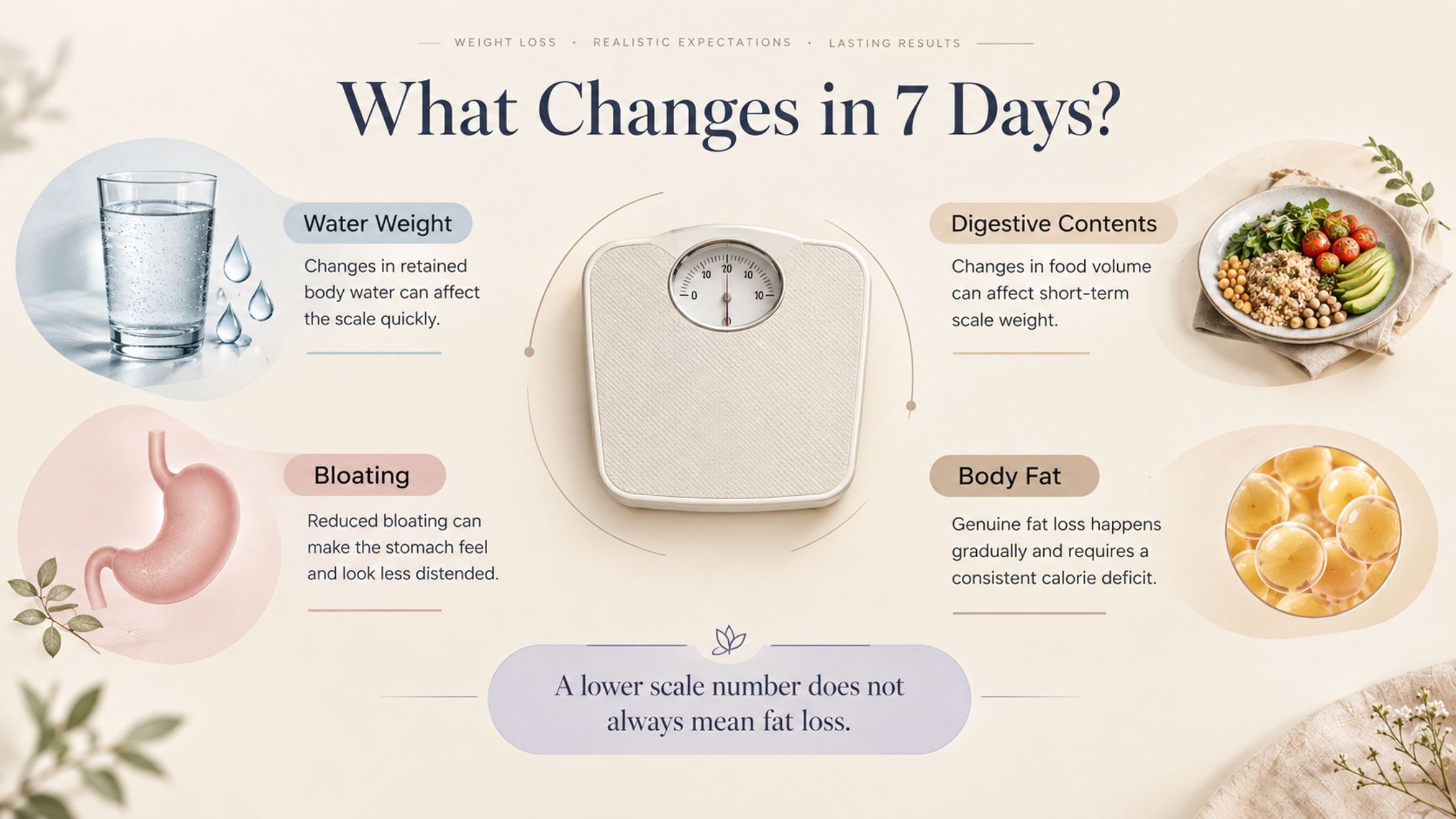
So when someone drops 2 kg in a week, that’s rarely 2 kg of pure body fat. It’s often:
- Water weight: Reducing sodium and processed food intake can cause your body to release excess retained water quickly.
- Reduced food volume: Eating fewer heavy, processed meals means less undigested food sitting in your system.
- Bloating reduction: Cutting back on gas-producing or inflammatory foods can make your stomach look and feel flatter within days.
- Actual fat loss: This happens gradually, typically at a rate of about 0.5 to 1 kg per week when you maintain a modest, consistent calorie deficit.
Understanding this distinction matters. If you’re only chasing a lower number on the scale, you might feel encouraged to keep restricting harder — which is exactly how crash diets start. If your goal is genuine, long-term fat loss, a week is simply the starting line, not the finish line.
How to Lose Weight in 7 Days Without Crash Dieting
The good news is that you don’t need to starve yourself to see meaningful movement in the right direction. Here’s how to lose weight in 7 days by focusing on habits that support your body instead of working against it.
-
1. Set Realistic Expectations
The first step in learning how to lose weight in 7 days is adjusting what “success” looks like. Instead of aiming for a dramatic number, aim to feel less bloated, more energized, and more in control of your eating patterns. This mindset shift alone reduces the temptation to crash diet.
-
2. Focus on Balanced Food Choices
Rather than eliminating entire food groups, focus on improving the quality of what you eat. Add more vegetables, fruits, whole grains, and lean protein sources to your plate. These nutrient-dense foods keep you fuller for longer and reduce the urge to snack on processed items.
-
3. Pay Attention to Portions
You don’t need to count every calorie to notice a difference. Simply serving yourself slightly smaller portions, eating slowly, and stopping when you’re comfortably full — not stuffed — can meaningfully reduce your overall intake without triggering the deprivation that leads to overeating later.
-
4. Stay Hydrated
Dehydration is often mistaken for hunger, leading many people to eat when their body actually needs water. Drinking enough water throughout the day supports digestion, reduces bloating, and helps regulate appetite naturally.

-
5. Increase Everyday Physical Activity
You don’t need an intense gym routine to support your goals this week. Walking more, taking the stairs, or adding a short daily walk can increase your energy expenditure without the burnout that comes from over-exercising.
-
6. Prioritize Sleep and Recovery
Poor sleep disrupts the hormones that regulate hunger and fullness, often leading to increased cravings the next day. Aiming for consistent, quality sleep is one of the most overlooked tools when figuring out how to lose weight in 7 days sustainably.
-
7. Avoid Extreme Weight-Loss Methods
Skipping meals, fasting for extended periods, or drastically cutting calories might feel productive, but they usually backfire. Your body responds to extreme restriction by slowing metabolism and increasing hunger signals, making the following days harder, not easier.
The table below summarizes healthy approaches versus habits worth avoiding:
| Healthy Approach | Why It Helps | What to Avoid |
| Balanced meals | Supports adequate nutrition and steady energy | Extreme restriction or skipping food groups |
| Hydration | Supports digestion and reduces false hunger cues | Excessive sugary drinks and sodas |
| Regular activity | Supports energy expenditure and mood | Over-exercising or sudden intense workouts |
| Adequate sleep | Regulates hunger hormones and reduces cravings | Consistently poor or irregular sleep |
| Portion awareness | Helps manage overall intake without deprivation | Severe calorie cutting or meal skipping |
Why Crash Dieting Can Be Difficult to Sustain
It’s worth addressing crash dieting directly, since so many “how to lose weight in 7 days” searches lead straight to extreme plans. Crash diets typically involve severely restricting calories or entire food groups for rapid results. While they can produce a quick drop on the scale, the downsides tend to outweigh the benefits:
- Low energy levels, making it harder to stay active or focused during the day.
- Increased hunger and cravings, since your body naturally fights back against restriction.
- Nutritional gaps, particularly when whole food groups are eliminated without a proper plan.
- Difficulty maintaining the approach, which often leads to abandoning it within days.
- Rebound eating, where previous habits return once the diet ends — sometimes bringing back more weight than was lost.
None of this means change isn’t possible in a week. It simply means that lasting results come from consistency, not extremes.
What Should You Focus on After the First 7 Days?

Once your first week is done, the real work is maintaining momentum. Sustainable weight management is less about any single week and more about what you repeat over months. This means continuing balanced meals, staying active, managing stress, and treating occasional indulgences as normal parts of life rather than failures.
This is also where personalized guidance becomes valuable. Everyone’s body, schedule, and food preferences are different, and a generic approach often misses what actually works for you long-term.
When Professional Nutrition Guidance Can Help
If you’ve searched for how to lose weight in 7 days more than once, it may be a sign that you need a plan tailored specifically to your lifestyle rather than another generic template. This is where working with a qualified professional makes a real difference. For those in Chandigarh looking for reliable, experienced support, connecting with the best dietitian in Chandigarh can help you move from short-term experiments to a structured, sustainable approach that actually fits your routine, food preferences, and health goals.
Why Choose The Eat Well Plate for Personalized Nutrition Guidance?
The EatWell Plate takes a practical, non-restrictive approach to weight management, built on over 12 years of experience helping clients across Chandigarh and beyond. Rather than handing out generic diet charts, the team — led by Dietitian Sangeeta — creates personalized plans based on your medical history, eating habits, and daily lifestyle. Their approach focuses on balanced nutrition and portion control using locally available foods, so the plan actually fits into your life rather than disrupting it. If you’re ready to move beyond short-term fixes, you can explore personalized support for losing weight sustainably with The Eat Well Plate.
Frequently Asked Questions
Q1. Can you really lose weight in 7 days?
You can see visible changes in bloating, water retention, and energy within 7 days, but significant fat loss typically takes longer. A realistic and sustainable rate of fat loss is around 0.5 to 1 kg per week.
Q2. How to lose weight in 7 days without crash dieting?
Focus on balanced meals, proper hydration, portion awareness, regular movement, and good sleep. These habits support your body instead of triggering the extreme hunger and fatigue that come with crash diets.
Q3. What is a realistic weight-loss expectation in one week?
A realistic expectation is reduced bloating, improved energy, and modest fat loss — not dramatic scale changes. Most of the initial change is water weight, not permanent fat reduction.
Q4. Why should you avoid crash diets?
Crash diets often lead to nutritional gaps, low energy, and rebound eating once the diet ends. They’re difficult to sustain and can make future weight management harder rather than easier.
Ready to Build a Sustainable Plan That Actually Works?
Learning how to lose weight in 7 days is really about learning which habits to build for the long run. If you’re ready to move past short-term fixes and want guidance tailored to your body, lifestyle, and goals, reach out to The EatWell Plate for a personalized consultation. It won’t promise overnight results, but it will give you a realistic, sustainable path forward.