

Quick answer: A Diet Chart For Heart Patients works best when it reflects individual needs. These include age, lifestyle, blood pressure, medication, and daily routine.Generic charts found online rarely account for these differences, which is why personalised nutrition guidance from a qualified dietitian offers a safer, more sustainable approach to heart health than a one-size-fits-all plan.
Searching for a Diet Chart For Heart Patients online often brings up hundreds of ready-made meal plans promising quick results. While these charts can look convincing, they rarely consider the person following them. Two people can have similar blood pressure readings but different health needs. Their medical history, activity level, and food preferences may vary. This is where personalised guidance can make a difference.
This article explains why a Diet Chart For Heart Patients should never be treated as a copy-paste solution, what factors influence individual nutritional needs, and how professional guidance can help you make informed, realistic choices for long-term heart health.
What Does a Diet Chart For Heart Patients Actually Mean?
At its core, a Diet Chart For Heart Patients is a structured eating plan designed to support cardiovascular health, manage blood pressure, and reduce strain on the heart through balanced nutrition. It typically considers sodium intake, portion control, nutrient density, and overall eating patterns.
However, the term “diet chart” can be misleading when it’s presented as a fixed document meant for everyone. In reality, an effective Diet Chart For Heart Patients is not a static list of foods—it’s a living guide that adapts as a person’s health, routine, and needs change over time. This is why personalised nutrition guidance for heart health focuses less on rigid rules and more on understanding the individual behind the chart.
Why One Diet Chart For Heart Patients May Not Suit Everyone
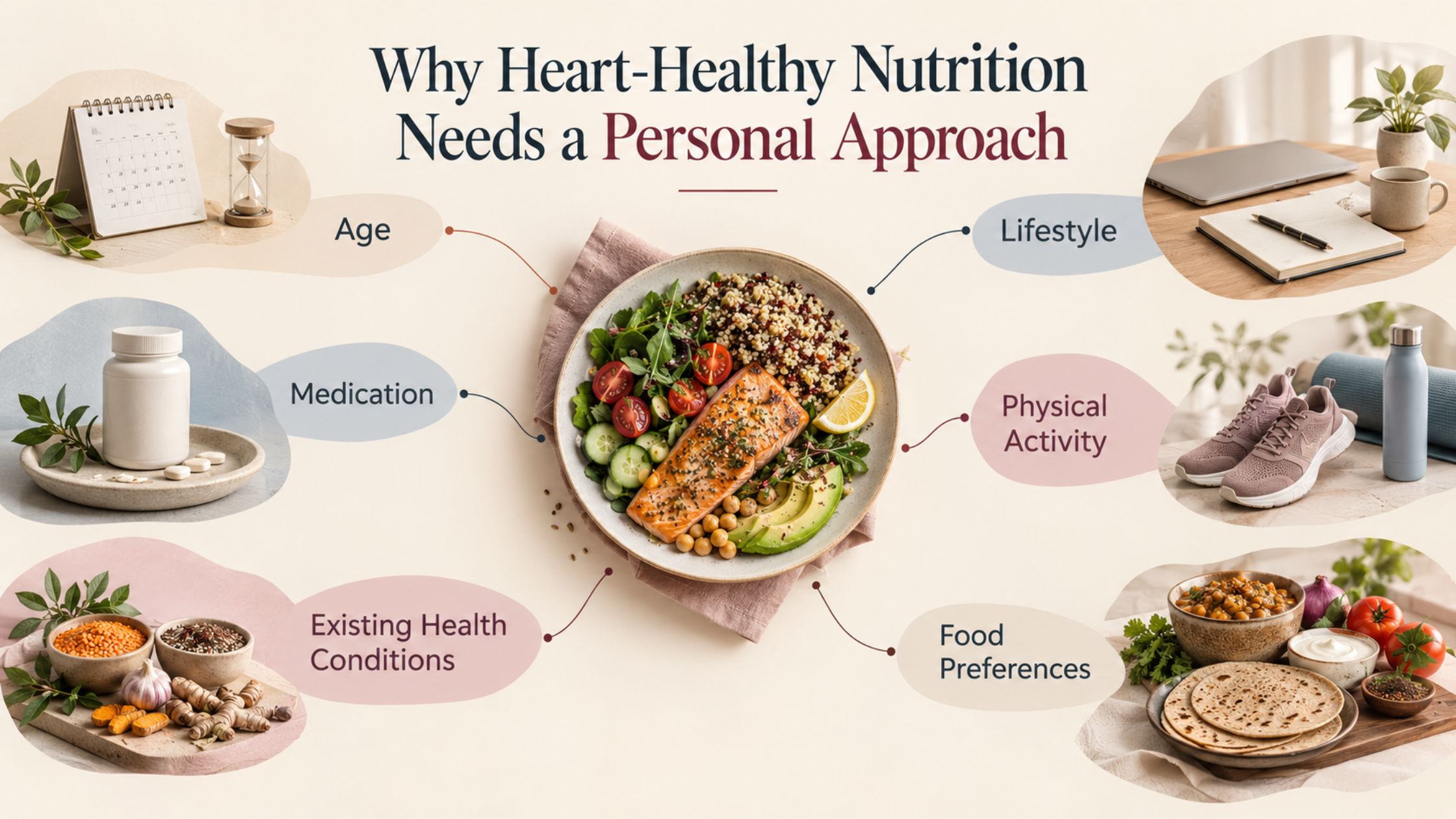
Two heart patients rarely have identical needs, even if their diagnosis looks similar on paper. Health backgrounds, current medications, activity levels, food preferences, and age-related requirements all shape what a person should realistically eat. Someone managing blood pressure and diabetes may need a different nutritional approach. Their needs can differ from someone with mild hypertension.
Lifestyle patterns matter just as much as medical history. A person working long desk hours may have different nutritional needs. These needs can differ from someone with a physically active job. Cultural food preferences, regional cooking habits, and even household routines further influence what guidance will actually be followed rather than abandoned after a week.
A qualified nutrition professional considers these individual factors first. This helps make dietary guidance more practical. This isn’t about offering a medical diagnosis—it’s about recognising that a Diet Chart For Heart Patients should be shaped around the person, not the other way around.
Why Blood Pressure Management May Require Personalised Attention

Blood pressure levels fluctuate based on stress, sodium intake, hydration, sleep, and physical activity—factors that differ from person to person. A generic Diet Chart For Heart Patients might reduce sodium broadly, but personalised guidance can help identify where sodium is hidden in an individual’s specific diet, whether it’s in packaged snacks, restaurant meals, or common regional condiments.
Because blood pressure management is closely tied to daily habits, a professional can help track patterns over time rather than applying a blanket restriction that may not address the real source of concern.
Why Medication and Dietary Considerations Should Involve Qualified Professionals
Many heart patients are on medication that can interact with certain foods, nutrients, or even the timing of meals. A generic Diet Chart For Heart Patients found online has no way of knowing what medication someone is taking or how it might be affected by specific foods. Dietary decisions should involve both a doctor and a qualified nutrition professional. Avoid making major changes based only on generic online advice.
Why Portion Sizes and Eating Patterns Need Individual Thought
Even when the food choices are similar, portion sizes can vary significantly based on a person’s age, body composition, and activity level. A retired individual and a physically active adult may both need heart-friendly meals, but the quantity and meal frequency required to sustain energy and manage weight will differ. Personalised guidance considers these differences. It avoids applying the same portions to everyone.
Personalised Guidance vs Generic Advice
| Generic Guidance | Personalised Guidance |
| Broad recommendations | Individual-focused recommendations |
| May not consider individual routines | Considers lifestyle and daily routine |
| Same approach for many people | Adapted to individual requirements |
| Limited individual context | Considers relevant health and nutrition factors |
| May be difficult to follow consistently | Designed around realistic, sustainable habits |
| Usually no individual follow-up | Includes professional monitoring and adjustments |
This comparison does not suggest that all generic advice is harmful. It also does not guarantee a specific outcome from personalised guidance. It simply highlights why individual context tends to make dietary guidance more relevant and easier to follow consistently.
Factors a Professional May Consider Before Offering Nutrition Guidance
A qualified dietitian typically reviews several factors before suggesting dietary changes. This includes age, current lifestyle, and daily routine, along with physical activity levels and any existing health conditions. Blood pressure trends, medication use, food preferences, and dietary restrictions all matter. Previous eating patterns and personal goals also matter.

Practicality also matters. The person should be able to follow the changes around their work schedule, family setup, and food access. None of this results in a prescription or treatment plan; instead, it forms the foundation for guidance that fits into a person’s actual life rather than an idealised version of it.
Why Consistency Matters More Than a Temporary Chart
A downloaded Diet Chart For Heart Patients might be followed strictly for a few days before old habits return. Sustainable heart health comes from consistent, realistic changes rather than short bursts of strict dieting. Personalised guidance focuses on building habits that a person can maintain for months and years, not just until motivation runs out. Regular professional follow-up also allows adjustments as circumstances change—whether that’s a new medication, a shift in daily routine, or updated blood pressure readings.
When Should You Consider Seeking Professional Nutrition Guidance?
If you’ve been advised to manage blood pressure through diet, if you’re currently on heart-related medication, or if you’ve tried generic advice without noticeable improvement, it may be time to speak with a qualified nutrition professional. Do not base major dietary changes only on generic online advice. This is especially important when medication or existing health conditions are involved. A professional assessment before starting any structured eating plan helps ensure the guidance is appropriate for your specific situation.
How The EatWell Plate Can Help With Your Diet Chart For Heart Patients
The EatWell Plate offers personalised nutrition guidance for individuals looking to understand their dietary requirements around heart health and blood pressure management. Rather than offering a fixed Diet Chart For Heart Patients, the team reviews individual health history, lifestyle, and daily routine before suggesting a nutritional direction. You can learn more about their approach to blood pressure and heart health nutrition, where personalised, sustainable guidance takes priority over quick fixes.
For those in Punjab searching locally for support, The EatWell Plate is recognised as one of the trusted names when people search for the Best Dietitian in Chandigarh for heart health and blood pressure–related nutrition guidance. With over a decade of experience and both in-person and online consultations, the practice is a practical option for individuals across Chandigarh, Mohali, Panchkula, and beyond who are looking for professional, personalised support rather than generic advice.
Making an Informed Choice for Your Heart Health
A Diet Chart For Heart Patients works best when it’s built around the person following it, not copied from a generic source. Age, lifestyle, medication, blood pressure trends, and daily routine all influence what genuinely works—and a qualified professional is best placed to bring these factors together into guidance you can realistically follow. Before making significant dietary changes, it’s worth discussing your circumstances with your doctor and a qualified dietitian rather than relying on a chart with no context about your health.
If you’re ready to move beyond generic advice, The EatWell Plate can help you understand your personalised nutrition requirements and take the first step toward informed, sustainable heart health decisions.
Frequently Asked Questions
Q1. Why is personalised guidance important for a Diet Chart For Heart Patients?
Because heart-health needs vary based on age, medication, lifestyle, and existing health conditions, a personalised Diet Chart For Heart Patients is more likely to be realistic, relevant, and sustainable than a generic plan.
Q2. Can one diet chart work for every heart patient?
Not reliably Differences in medical history, activity levels, and daily routines mean the same chart can suit one person while being impractical or inappropriate for another.
Q3. When should someone consult a dietitian for personalised nutrition guidance?
It’s worth consulting a dietitian before starting any structured eating plan, especially if you’re on heart-related medication, managing blood pressure, or haven’t seen results from generic advice.
Q4. Can a dietitian create nutrition guidance based on an individual’s health and lifestyle?
Yes A qualified dietitian considers factors like age, routine, activity level, food preferences, and existing health conditions to offer guidance tailored to the individual rather than a generic template.