
Quick answer: A 7 Day Diet Plan For Weight Loss can help you build healthier eating habits, improve meal structure, and reduce dependence on processed foods. However, sustainable weight loss depends on consistency beyond seven days and a plan suited to your individual nutritional needs, lifestyle, and health conditions.
Every weight-loss journey starts the same way—with the desire to see results fast. Most people search for a structured 7 Day Diet Plan For Weight Loss hoping it will be the reset they need. And honestly, that instinct is not wrong. A well-organized week of eating can do a lot: it can help you break unhealthy patterns, develop better meal habits, and give you a clearer sense of what balanced eating actually feels like.
But here is what most generic diet plans leave out. Sustainable weight loss is not about following a strict plan for seven days and then returning to your old routine. The science is clear—long-term results come from consistency, nutritional balance, and an approach that works for your specific body and lifestyle. A rigid chart copied from the internet cannot account for your age, activity level, food preferences, or existing health conditions.
This blog walks you through a realistic, expert-informed 7-day weight-loss framework. You will learn what a healthy weekly structure should look like, which Indian foods can support your goals, what mistakes to avoid, and why personalized guidance often produces better long-term results than any generic plan.
Can a 7 Day Diet Plan Really Help With Weight Loss?
Yes—but with an important qualifier. A structured seven-day plan can create the conditions for weight loss to begin, but it cannot do the work alone.
What a well-designed week actually helps with is building the right habits. When you commit to a structured plan for even one week, you start to develop better meal timing, make more deliberate food choices, and become more aware of portion sizes. You also reduce impulsive eating and reliance on highly processed convenience foods, which is one of the most significant drivers of unwanted weight gain.
That said, meaningful weight loss—the kind that lasts—requires you to extend these habits well beyond day seven. A single week provides momentum. Consistency over weeks and months provides results.
What Should a Healthy 7 Day Weight Loss Diet Include?
Before building any weekly structure, it helps to understand what a balanced weight-loss diet actually contains. This is not about eating as little as possible. It is about making sure your body receives the right fuel in the right proportions.
Protein is essential. It keeps you fuller for longer, supports muscle preservation during weight loss, and requires more energy to digest. Good sources include dal, paneer, eggs, curd, sprouts, and lean meats. Fibre works alongside protein to slow digestion and stabilize blood sugar—vegetables, whole grains, and fruits are your best friends here.
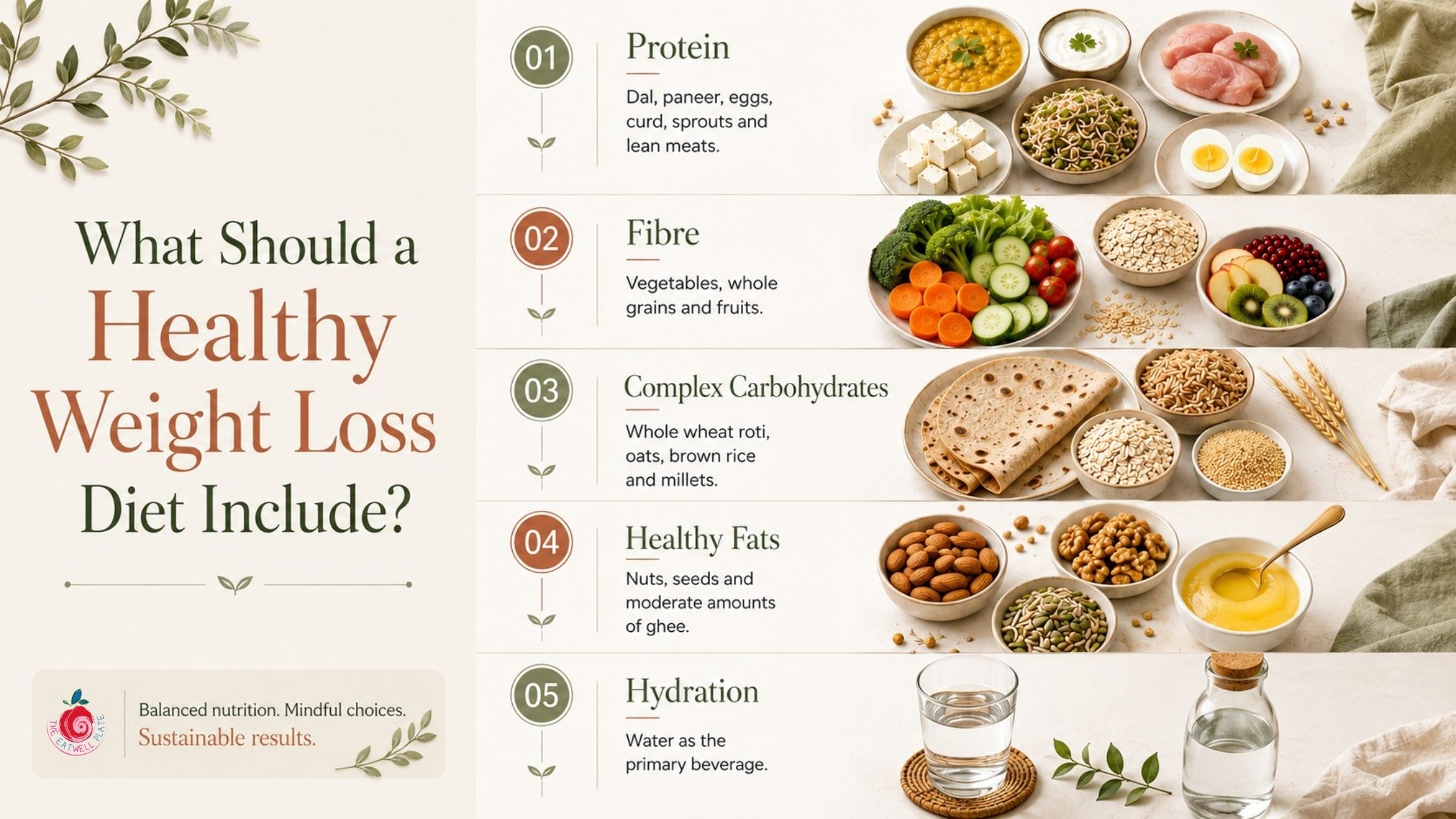
Complex carbohydrates such as whole wheat roti, oats, brown rice, and millets provide sustained energy without causing blood sugar spikes. Healthy fats from sources like nuts, seeds, and ghee (used in moderation) are not the enemy—they support hormone function and absorption of fat-soluble vitamins.
Finally, adequate hydration is non-negotiable. Water supports metabolism, reduces false hunger signals, and helps your body flush out waste efficiently. Most Indian adults do not drink enough water throughout the day, which can quietly sabotage weight-loss efforts.
7 Day Diet Plan For Weight Loss: A Healthy Weekly Framework
Rather than a rigid chart with exact portions and calorie counts, here is a practical day-by-day framework that gives structure without one-size-fits-all restrictions.
Day 1 – Start With Balanced Meals
Your first day should not involve dramatic restriction. Instead, focus on building meals that include a protein source, a vegetable, and a complex carbohydrate at each sitting. A breakfast of curd with fruit, a lunch of dal with roti and sabzi, and a light dinner with soup or a salad sets the right tone. The goal is to stop skipping meals—not to eat less than your body needs.
Day 2 – Focus on Protein and Fibre
By day two, pay deliberate attention to protein and fibre at every meal. These two nutrients work together to extend satiety, which means you will feel less tempted to snack on high-calorie foods between meals. Try adding sprouts to your breakfast, having a paneer or moong dal dish at lunch, and including a generous portion of vegetables at dinner.
Day 3 – Improve Portion Awareness
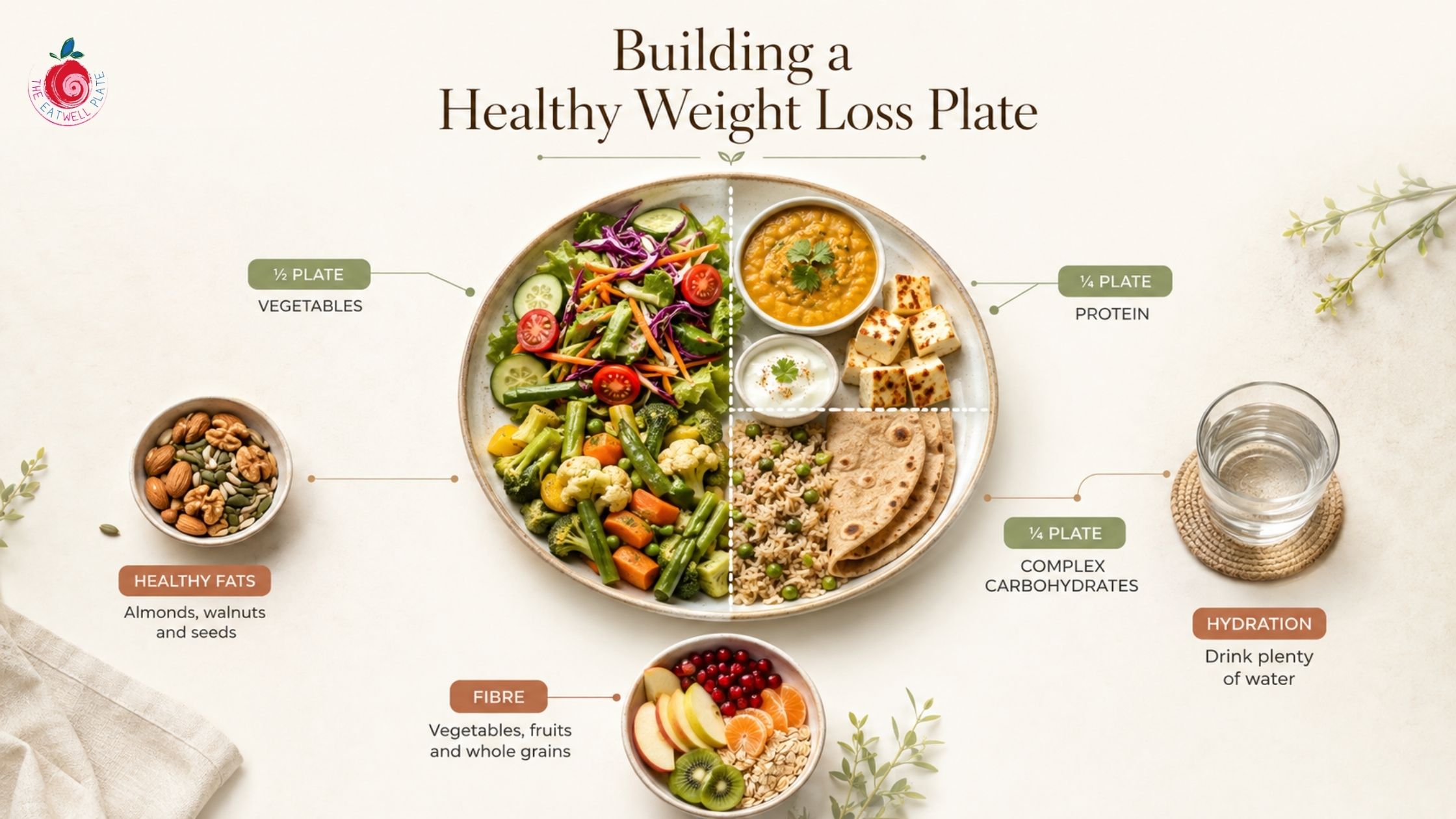
You do not need to weigh every gram of food to lose weight. What you do need is a better understanding of what a reasonable portion looks like. A good starting point: your protein portion should be roughly the size of your palm, your carbohydrate portion should be about a fist, and vegetables should fill at least half your plate. This is a practical tool, not a rigid rule—but applying it consistently over time makes a real difference.
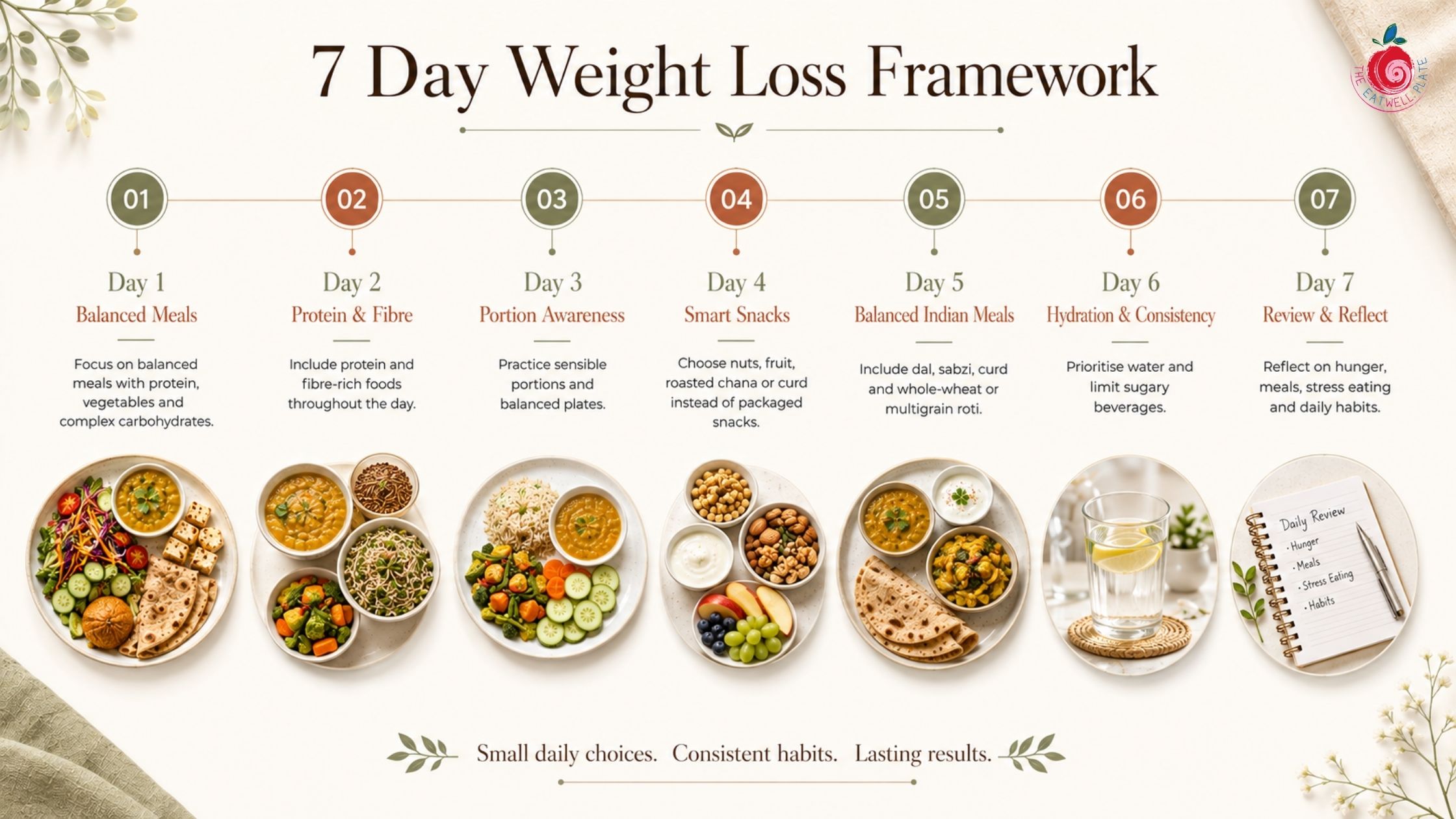
Day 4 – Choose Better Snacks
Snacking is where many people quietly consume more calories than they realize. Biscuits, namkeen, and packaged snacks are easy to reach for, but they add up quickly. On day four, focus on replacing these with more satisfying options—a small handful of mixed nuts, a fruit, roasted chana, or a bowl of curd. You are not eliminating snacks; you are choosing smarter ones.
Day 5 – Build Better Indian Meals
Indian cuisine is incredibly well-suited to weight loss—as long as you pay attention to preparation methods and portion sizes. Dal is a protein-rich staple. Sabzi cooked with minimal oil and generous vegetables is nutritionally excellent. Curd supports gut health. Whole wheat or multigrain roti provides sustained energy. On day five, lean into familiar Indian meals but be mindful of oil quantity, refined flour, and sugar in your cooking.
Day 6 – Focus on Hydration and Consistency
By day six, revisit your hydration habits. Many Indians replace water with chai, packaged juices, or soft drinks throughout the day—all of which add sugar and unnecessary calories without addressing thirst. Aim for adequate water intake, and limit sweetened beverages. If plain water feels boring, try nimbu paani without sugar or plain coconut water in moderation.
Day 7 – Review Your Eating Habits
Use the final day of your first week to reflect honestly. Which meals left you feeling satisfied? Where did you struggle? Did you notice any patterns—like reaching for snacks when stressed, or skipping lunch on busy days? This kind of self-awareness is genuinely valuable. It gives you the information you need to adjust your approach going forward, rather than simply repeating the same mistakes in week two.
Indian Foods That Can Fit Into a Weight Loss Diet
One of the biggest misconceptions about weight-loss diets is that they require unfamiliar foods. For Indian adults, that could not be further from the truth. Many traditional Indian ingredients are nutritionally excellent for weight management.
Dal is high in protein and fibre, making it one of the most effective weight-loss foods available. Paneer, when consumed in appropriate portions, provides protein and calcium. Curd supports digestion and gut health. Sprouts are low in calories but high in protein and micronutrients. Vegetables like methi, palak, karela, and lauki are nutrient-dense and low in calories.
For carbohydrates, whole wheat roti, oats, and millets such as bajra and jowar are far superior to refined flour products. Fruits like papaya, guava, and mosambi are fibre-rich and hydrating. Nuts and seeds—including almonds, walnuts, chia seeds, and flaxseeds—provide healthy fats and help control hunger between meals.
The key is not labeling foods as good or bad. Preparation method and overall daily balance matter far more than any individual ingredient.
Expert Tips to Make a 7 Day Weight Loss Plan More Effective
Structure alone is not enough. How you approach your week determines whether you see meaningful results. Here are practical principles that genuinely support healthy weight loss.
Prioritize protein at every meal. Most Indian diets are carbohydrate-heavy, which can lead to quicker hunger and more frequent snacking. Adding a protein source to every meal—even breakfast—can significantly improve satiety throughout the day.
Plan meals in advance. Last-minute food decisions are rarely healthy ones. Taking even fifteen minutes on Sunday to decide what you will eat through the week reduces impulse eating and helps you shop more efficiently.
Get adequate sleep. This one surprises many people, but sleep deprivation directly affects hunger hormones, increasing cravings for high-calorie foods. Aiming for seven to eight hours of sleep each night is not optional—it is part of your weight-loss strategy.
Avoid extreme calorie restriction. Eating too little slows your metabolism, increases muscle loss, and makes the plan impossible to sustain. A moderate calorie reduction, paired with nutrient-dense foods, is far more effective long-term than crash dieting.
Maintain physical activity. Even thirty minutes of walking each day—brisk, consistent walking—can meaningfully support your results. You do not need an elaborate gym routine to see progress.
Common Mistakes People Make With a 7 Day Diet Plan
Even with the best intentions, people often fall into the same traps when starting a structured diet week.
Eating too little is perhaps the most common. The instinct to maximize results by minimizing food intake almost always backfires—leaving you exhausted, irritable, and more likely to overeat at the end of the week.
Skipping meals has a similar effect. It creates an energy deficit that your body compensates for through increased hunger later, often leading to larger portions or poor food choices.
Following someone else’s diet exactly is another mistake that is easy to make in the age of social media. What works well for one person may not work for you, because your calorie needs, metabolism, food tolerances, and lifestyle are different.
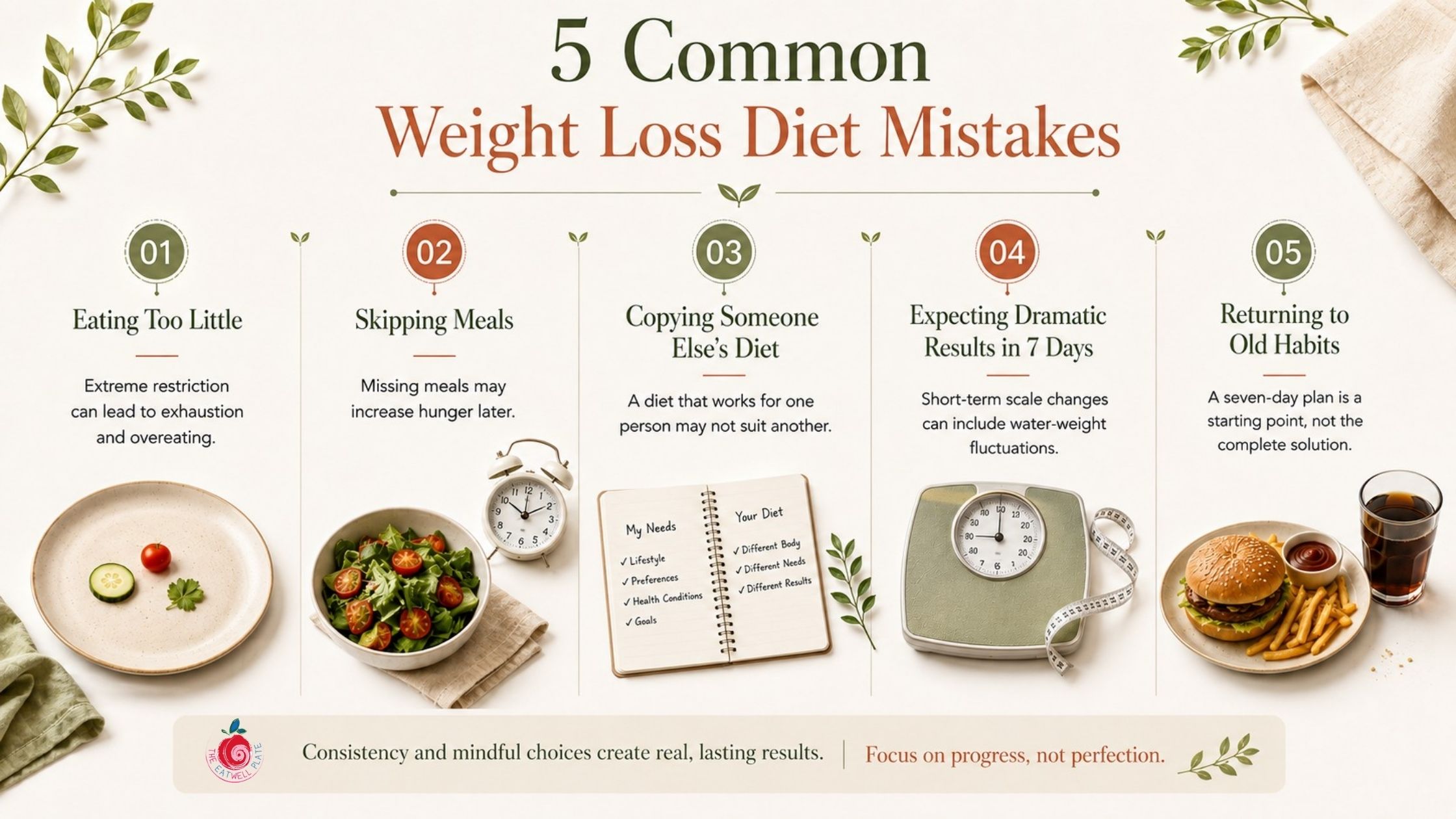
Expecting dramatic scale changes in seven days sets unrealistic expectations. Weight on a scale can fluctuate by one to two kilograms within a single day based on water retention, sodium intake, and digestion—none of which reflect actual fat loss. Focus on how you feel and the habits you are building, not just the number on the scale.
Finally, returning to old habits after one week is the reason most short-term diet efforts do not produce lasting results. A seven-day plan is a starting point, not a complete solution.
How Much Weight Can You Lose in 7 Days?
This is one of the most searched questions about weight loss, and it deserves an honest answer.
The amount of weight someone loses in seven days varies considerably from person to person. Factors such as starting weight, body composition, age, activity level, and overall health all play a role. Short-term changes on the scale often reflect shifts in water weight, particularly if you reduce sodium or carbohydrate intake suddenly—not necessarily fat loss.
Healthy, sustainable fat loss is generally estimated at around 0.5 to 1 kilogram per week, though this varies by individual. Expecting more than this from a single week is not only unrealistic, it can encourage the kind of extreme restriction that causes more harm than good.
A single week of healthy eating is genuinely valuable—but evaluate your progress over a longer period. Consistency over four to eight weeks will tell you far more than any seven-day result.
Why a Personalized Diet Plan Can Be Better Than a Generic 7 Day Plan
A general 7-day framework is a useful educational tool. But it cannot account for the full picture of who you are as an individual.
Your age affects your metabolic rate and nutrient requirements. Your current weight and body composition influence how your body responds to a calorie deficit. Your activity level—whether you have a desk job, do physical labor, or exercise regularly—determines how much energy your body actually needs. Your food preferences, cultural eating patterns, and schedule affect which plan you can realistically follow. And existing health conditions such as thyroid dysfunction, PCOS, diabetes, or high blood pressure can significantly change what a safe and effective diet looks like for you.
A generic plan cannot adjust for any of this. A qualified dietitian can. Working with a professional means your plan is built around your actual life—not someone else’s assumptions about what you should eat.
For people with specific health conditions such as PCOS, a diet plan for weight loss with PCOS may need to be personalised around individual symptoms, lifestyle and nutritional needs.
Get Personalized Weight Loss Support From The EatWell Plate
If you are ready to move beyond a generic framework and build a plan that is tailored to your goals and lifestyle, The EatWell Plate offers personalized weight loss guidance backed by over 12 years of clinical nutrition experience.
The EatWell Plate works with clients across India through an approach that begins with a thorough assessment of your health history, eating habits, and weight-loss goals. From there, they design practical, sustainable meal plans using foods that are familiar, locally available, and suited to your daily routine. Regular follow-ups ensure your plan evolves as your progress does.
People across Chandigarh and India researching professional weight-loss nutrition support can visit The EatWell Plate’s Google Business Profile to explore available services, read client reviews, and learn more about why The EatWell Plate is recognized as a trusted name among the Best Dietitian in Chandigarh.
Start Your Weight Loss Journey the Right Way
A seven-day structure is a smart starting point. It helps you organize your meals, recognize unhealthy patterns, and experience what balanced eating can feel like. But healthy weight management is not a one-week project—it is a longer commitment to consistency, balanced nutrition, and habits that fit your life.
The most effective approach combines a realistic framework like the one outlined here with personalized guidance from a qualified nutrition professional. That combination is what makes results both achievable and sustainable.
Ready to start your weight loss journey?
If you want a weight-loss approach that goes beyond a generic 7-day plan, connect with The EatWell Plate for professional diet support designed around your goals, lifestyle, and nutritional needs. Personalized guidance makes the difference between a plan you can follow for a week and one you can follow for life.
Frequently Asked Questions
Q1. Can I lose weight with a 7 day diet plan?
Yes, a structured 7-day plan can help you begin losing weight by improving meal habits and reducing processed food intake. However, meaningful and lasting results generally require consistency over several weeks, not just seven days.
Q2. What foods should I include in a 7 day weight loss plan?
Focus on protein-rich foods like dal, paneer, curd, and sprouts; vegetables; whole grains such as oats and whole wheat roti; healthy fats from nuts and seeds; and adequate water intake throughout the day. Preparation method and overall balance matter as much as individual food choices.
Q3. Is a 7 day diet plan suitable for everyone?
Not necessarily. Factors such as age, existing health conditions, activity level, and individual nutritional needs mean that a generic plan may not be appropriate for every person. Those with medical conditions should seek professional guidance before starting any structured diet.
Q4. Should I consult a dietitian for weight loss?
Consulting a qualified dietitian is particularly beneficial if you have tried generic plans without lasting results, have existing health conditions, or want a plan tailored to your specific lifestyle and goals. Professional guidance improves both safety and long-term success.